






Ultimate guide to spot fake Vietnam Dong
Fake Vietnam Dong notes have become a significant concern, as counterfeiters increasingly mimic authentic currency features. Thus, identifying fake notes is not just a skill but a necessity, especially for travelers who are going to exchange currency for their trip. Understanding the characteristics of genuine notes and learning to spot counterfeits is essential in safeguarding one’s financial interests.
Understanding the Vietnam Dong Note
Overview
Before going to our guide on how to spot fake Vietnam Dong, we will have a look at the overview of Vietnamese currency. The Vietnam Dong (VND) is a unique currency, notable for its distinct materials and features. Legitimate notes are printed on polymer, a durable and slightly elastic material, distinguishing them from common paper currencies. Each note showcases intricate designs, vibrant colors, and national symbols reflective of Vietnam’s heritage. Notably, they incorporate advanced security features such as watermarks, security threads, and color-shifting inks. These elements are meticulously crafted to ensure authenticity and are difficult for counterfeiters to replicate accurately. Understanding these characteristics is crucial in distinguishing real notes from counterfeit ones.
Authentic Vietnam Dong
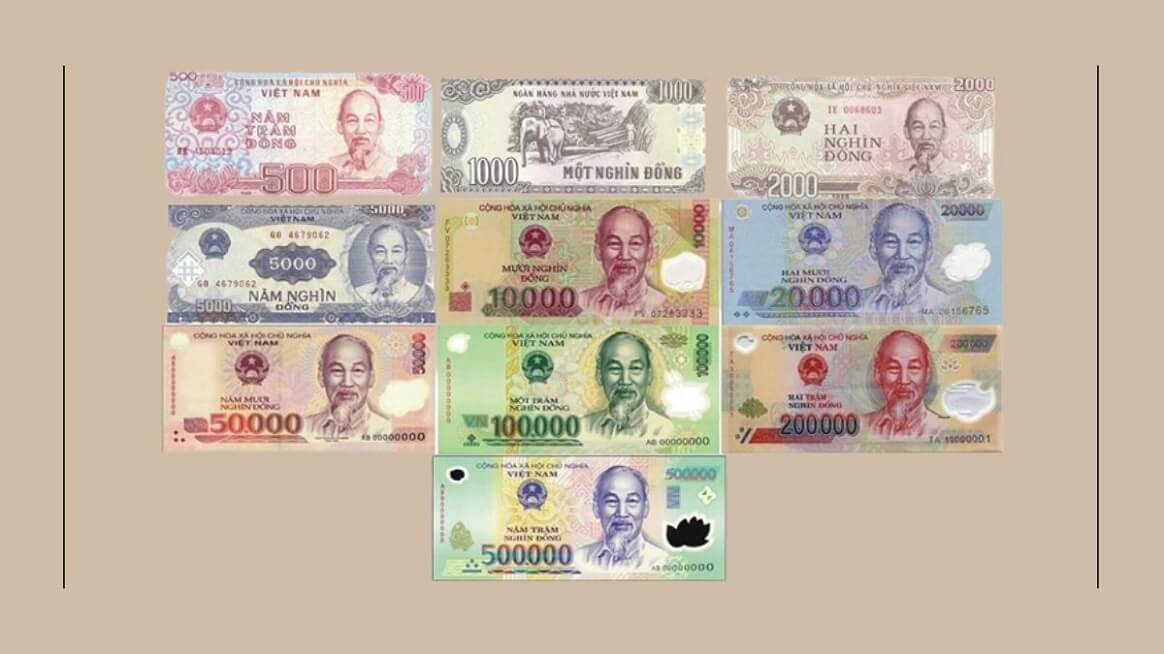
Authentic Vietnam Dong notes are distinguished not only by their imagery but also by their sizes and colors, which vary across denominations:
- 500 VND Note: This note features Hai Phong port and is printed on red-pink lotus cotton paper. It is smaller and less commonly used.
- 1,000 VND Note: Illustrates a scene of Lumber productions using elephants in the Central Highlands of Vietnam. This purple cotton paper note is relatively small in size.
- 2,000 VND Note: Displays female textile factory workers, printed on dark brown cotton paper.
- 5,000 VND Note: Features Tri An Hydroelectric Power Plant and is the largest denomination printed on dark blue cotton paper.
- 10,000 VND Note: Depicts the Bach Ho oil field. This is the smallest polymer note, dark brown on a green-gold background, and much shorter than other polymer notes.
- 20,000 VND Note: Shows the Japanese Covered Bridge in Hoi An, printed on polymer in a distinct blue color.
- 50,000 VND Note: Features historic sites in Hue, printed on polymer in a pink color.
- 100,000 VND Note: Displays Van Mieu – Quoc Tu Giam, printed on polymer, predominantly in yellow.
- 200,000 VND Note: Portrays Dinh Huong Island in Halong Bay, printed on polymer, mainly in brownish-red.
- 500,000 VND Note: Features a house in Sen village in Ho Chi Minh’s hometome, printed on polymer, primarily in blue-green. This is the largest denomination and size among the current notes.
For more about Vietnam currency, read this article:
Essential Guide to Vietnam Currency (VND) for Travelers
Top VND notes that are likely counterfeited
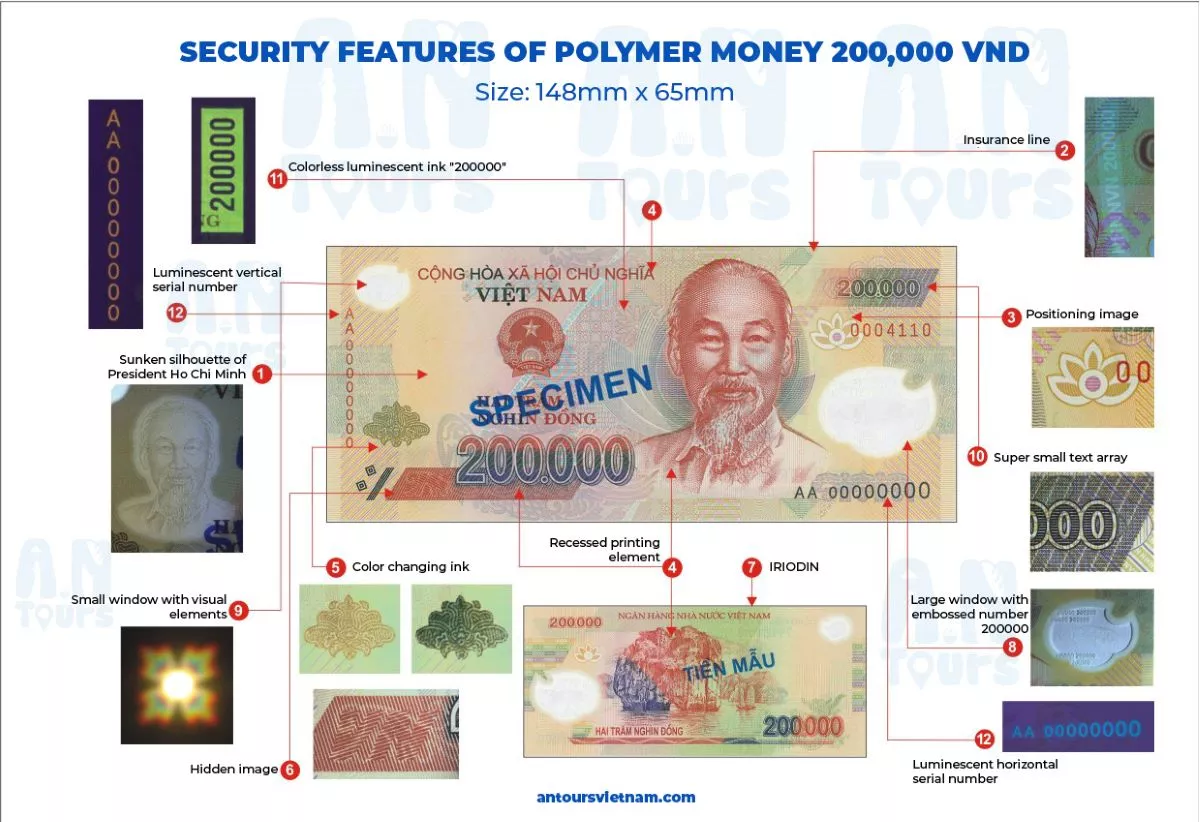
The likelihood of counterfeiting often correlates with the value of the currency note. In the case of Vietnam Dong, higher denominations such as the 200,000 VND and 500,000 VND notes are more likely to be counterfeited. This is primarily due to their higher value, making the effort of counterfeiting more profitable for counterfeiters.
Lower denominations, like the 500 VND, 1,000 VND, and 2,000 VND notes, are less likely to be faked simply because the effort involved may not justify the potential gain. However, it’s important to note that while higher denominations are more attractive targets for counterfeiters, any denomination can potentially be counterfeited.
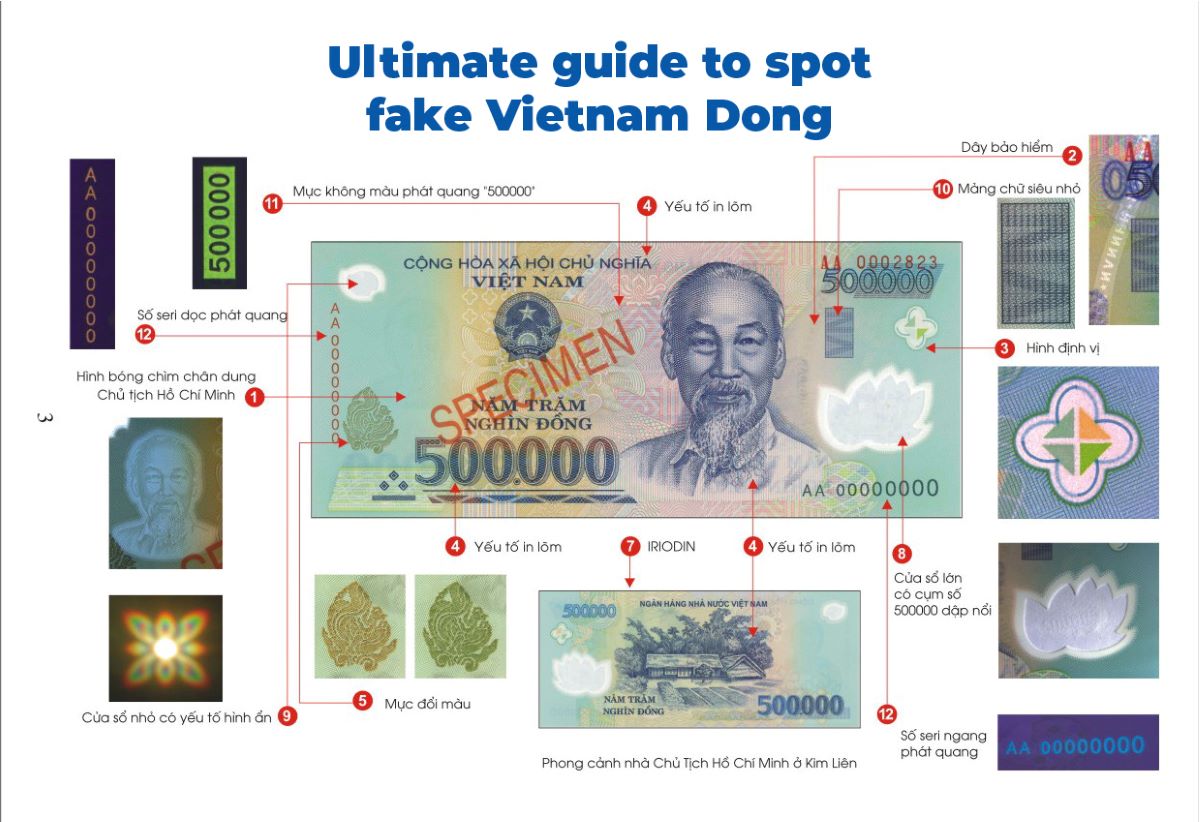
The photo below (Security features of polymer Vietnam Dong (VND) money notes) is an example for the points that you can use to detect authentic Vietnamese money notes. Most of the polymer VND will have these same points.
Methods to Identify Fake Vietnam Dong
Checking Polymer Material
- Genuine polymer notes have a unique feel; they are smoother and more elastic than paper notes.
- Test the durability by gently stretching the note; authentic polymer notes should return to their original shape without damage.
- Fake Vietnam Dong (VND) notes might feel overly stiff or too flexible and may not withstand stretching.
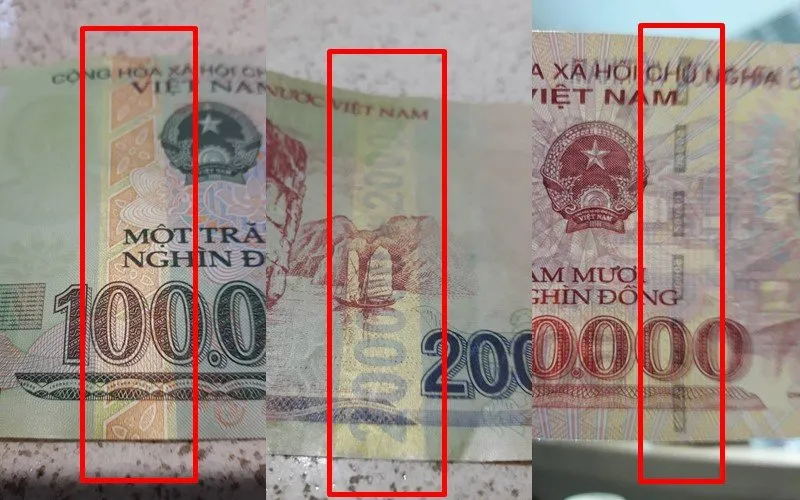
Observing Watermarks and Security Features
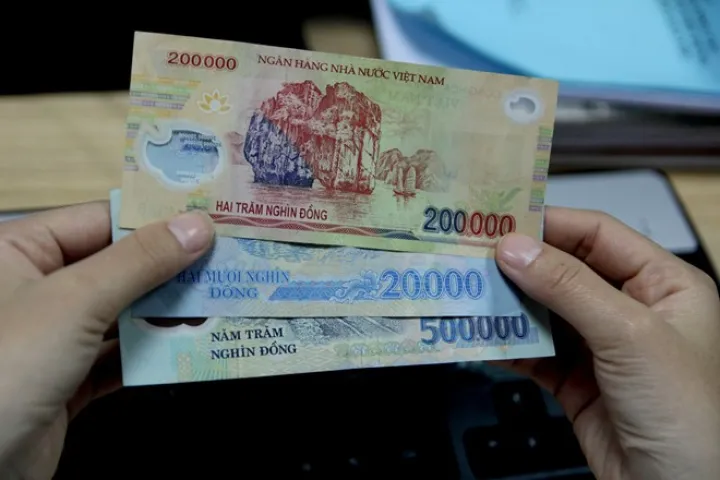
- Hold the note up to a light source. Authentic notes will have a clear, visible watermark, often an image of Ho Chi Minh.
- Security features should also be visible. They are embedded within the note and run from top to bottom. These threads may appear as a continuous line or with breaks.
- Counterfeit notes may lack these features or have poorly imitated ones that are blurry or inconsistently placed.
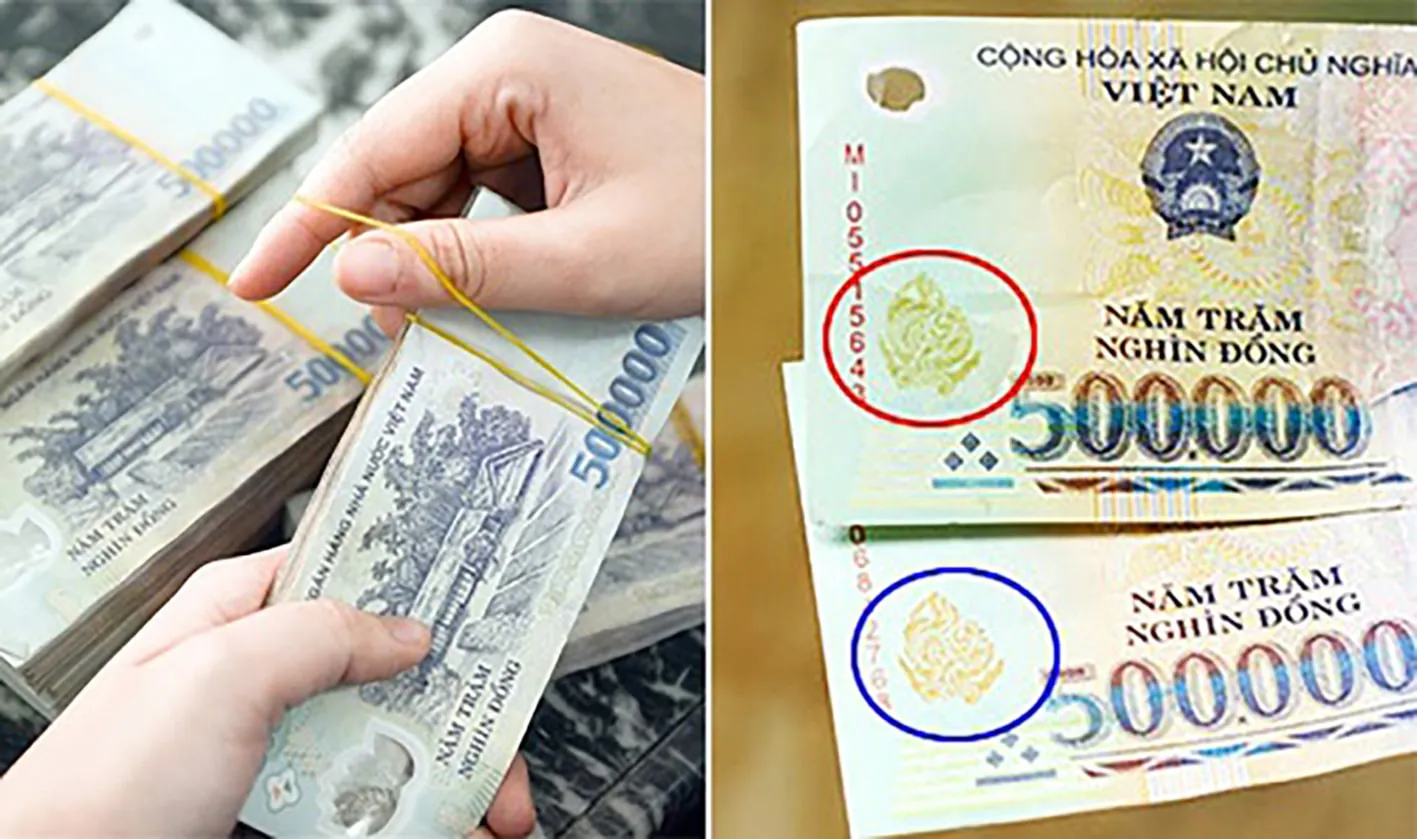
Feeling Raised Printing
- Run your fingers over the note, especially over the portraits and seals. Authentic notes have a tactile feel due to raised printing.
- This feature is often absent or poorly replicated in the fake Vietnam Dong notes, resulting in a flat, smooth surface.
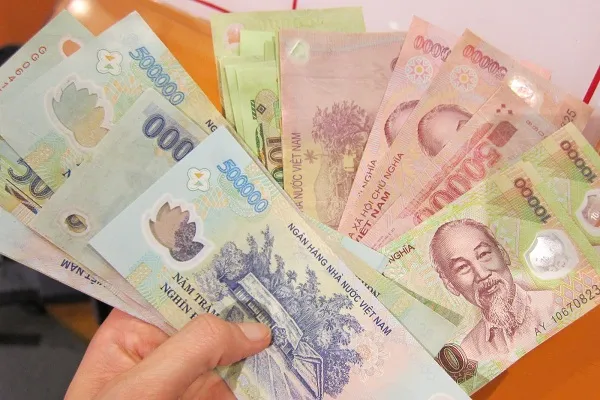
Tilt Test
- Look for color-changing ink and iridescent stripes on higher denomination notes.
- When you tilt an authentic note, colors should shift noticeably. For example, on some notes, certain elements might change from gold to green.
- Counterfeit notes often fail to replicate this effect convincingly, showing no change or a very muted one.
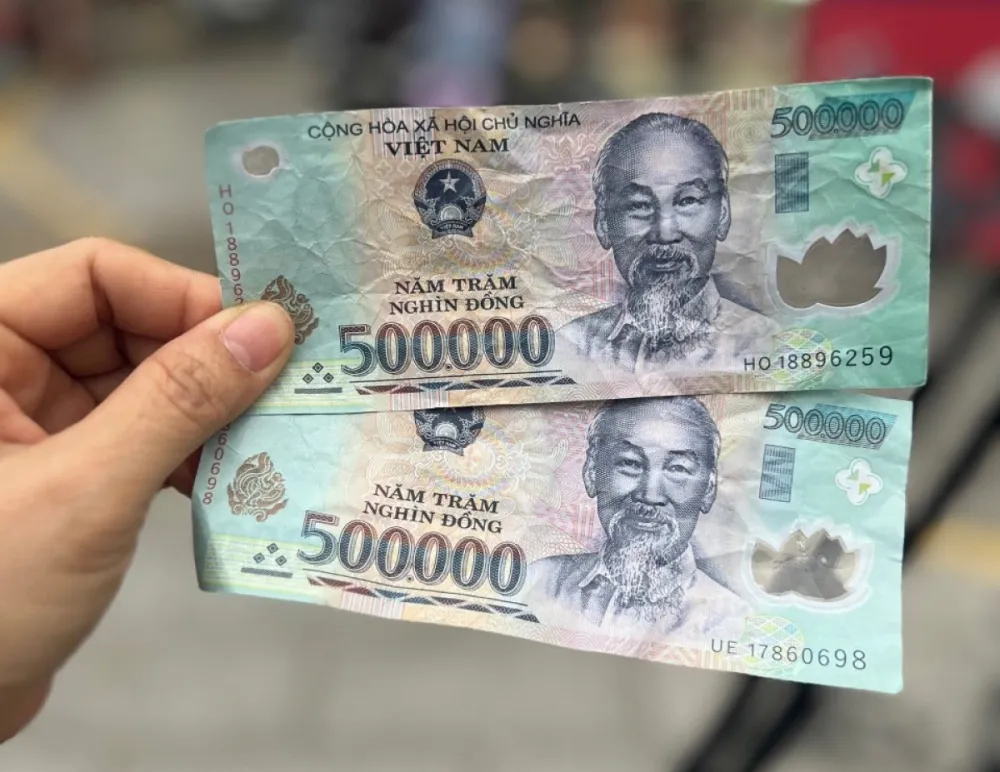
Hidden Images
- Examine the transparent windows on the notes. Authentic polymer notes have intricate hidden images embedded within these windows.
- These images are often complex and detailed, making them hard for counterfeiters to replicate precisely.
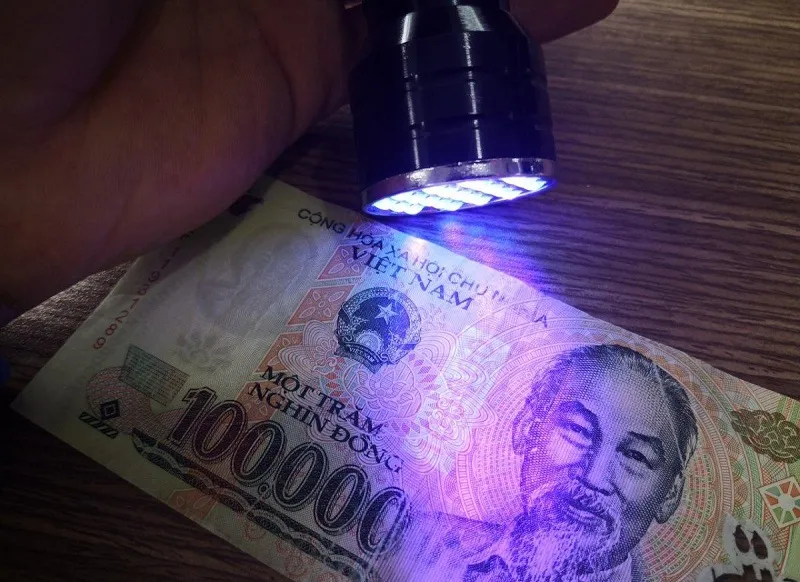
Micro-Printing and UV Light Test
- Use a magnifying glass to inspect the micro-printed areas. Genuine notes have extremely fine text printed in certain areas, often too small to be seen clearly by the naked eye.
- Under UV light, certain features on authentic notes will fluoresce. For example, some parts may glow, or serial numbers might become visible. However, this method may not work for travelers, as almost nobody will think of bringing a UV light machine when they travel.
- Fake Vietnam Dong notes may not have these micro-printed details, or they might not respond to UV light as expected
Handling Fake Vietnam Dong as a Traveler
If you’re a traveler in Vietnam and discover that the Vietnamese Dong you received from a currency exchange is fake, it’s important to act promptly and cautiously. While specific guidelines for this situation are not extensively detailed in the sources I found, here are some general steps you can take based on common practices in similar situations:
Report to the Authorities
Contact the local police, or official Vietnam tourist support hotline to report the incident. It’s important to inform them about where and how the exchange took place. The authorities can take necessary actions and also help prevent others from falling victim to the same scam. You can visit our article below to find contacts of your local authority for Vietnam travelers:
Return to the Exchange Point
If it’s safe and feasible, return to the place where you exchanged the money. Explain the situation and ask for a resolution. However, be aware that if the exchange was done at an unofficial or unlicensed currency exchange, they may not be cooperative. For good money exchange locations, please check these articles:
- Best places for currency exchange in Da Nang – Hoi An
- Best places for currency exchange in Hanoi
- Best places for currency exchange in Ho Chi Minh City
- Best places for currency exchange in Phu Quoc
Inform Your Embassy
Contact your country’s embassy or consulate in Vietnam. They can offer guidance and, in some cases, assist in communicating with local authorities.


Content summary
Other blogOther blog
Related blogs

What to Eat in Hue — 10 Dishes Locals Actually Eat
Hue is Vietnam’s food capital and criminally underrated. Here are 10 dishes locals actually eat — where to find them and what they cost.

Where to Stay in Hoi An — Best Areas & Hotels for Every Budget
Old Town or the beach? Here’s the honest breakdown of every Hoi An neighborhood — what each one is like, who it suits, and real hotels at real prices.

10 Best Things to Do in Ben Tre — Coconut Canals, Sunset Birds & Real Mekong Life
Only 85km from Saigon, Ben Tre is the Mekong at its most authentic. Here are 10 things to do — coconut canals, warm candy, sunset storks and food worth the drive.