






8 Best Things to Do in Hue — Imperial City, Royal Tombs & River Life
Hue gets skipped on too many Vietnam itineraries. Here are 8 reasons that’s a mistake — Imperial City, royal tombs, Perfume River boats, and food worth the trip alone.
Hue is the city travelers skip. It sits a couple hours north of Da Nang, off the beach circuit, and it’s the place people keep saying they’ll “get to next time.” That’s a mistake — this was Vietnam’s imperial capital for 143 years, and the food alone is worth the detour.
August is a good month for it. Central Vietnam has its best weather from June through August — clear skies, calm seas — and Hue in summer is dry and hot rather than wet. October is the month to avoid here, when the rains roll in. If you’re planning a Central Vietnam run right now, Hue is at its peak.
Here’s what we found after sending clients up the coast and scouting the route ourselves: give Hue two days, and spend them on these 8 things.
At a Glance
| # | What | Why it’s worth it | Time | Price |
|---|---|---|---|---|
| 1 | Imperial City | The royal palace complex — the main event | 3+ hours | 200,000 VND |
| 2 | Royal Tombs | Palace-gardens of the Nguyen emperors | Half day | 150,000 VND each |
| 3 | Thien Mu Pagoda & Dragon Boat | The classic river arrival | 2–3 hours | Pagoda free; boat from ~150,000 VND |
| 4 | Dong Ba Market | Hue’s biggest market, best at breakfast | 1–2 hours | Free entry |
| 5 | Bún bò Huế & Royal Cuisine | The reason many foodies come | 1–2 hours | 40,000–80,000 VND a bowl |
| 6 | Truong Tien Bridge at Night | The lit bridge over the Perfume River | 30–60 min | Free |
| 7 | Thanh Toan Covered Bridge | A rural bridge older than most of Hoi An | Half day | Free |
| 8 | DMZ Day Trip | Vinh Moc tunnels & war history | Full day | From ~1,200,000 VND |
1. The Imperial City
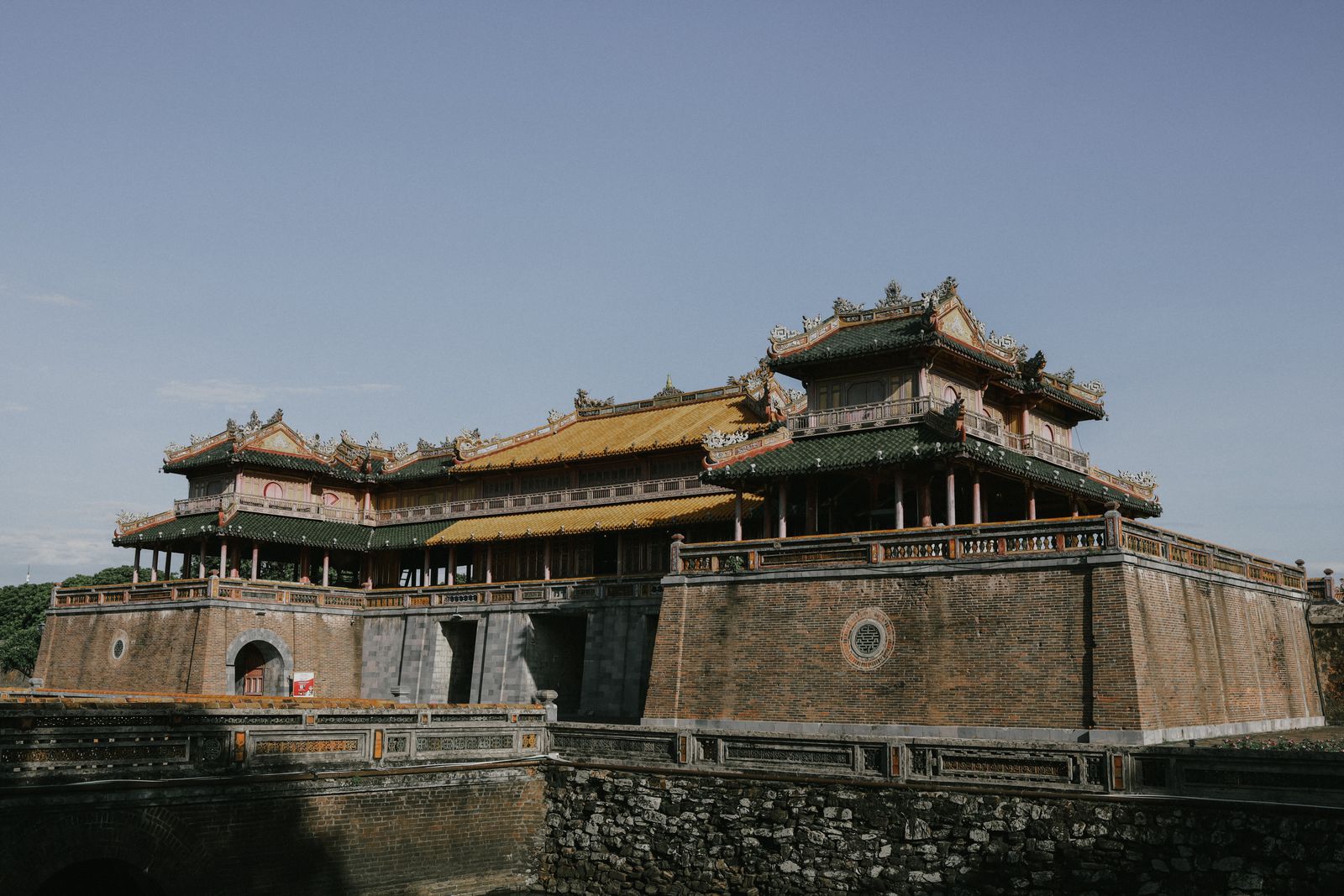
The Imperial City is the reason Hue is on the map. The Nguyen dynasty ruled from this walled complex from 1802 to 1945, and the whole thing — the Citadel, the palaces, the moats — is a UNESCO World Heritage site. You could spend a full day inside and still miss corners.
Ticket is 200,000 VND per adult and the booth takes cash only — bring VND, because there’s no ATM inside and the walk back to one is annoying. Budget at least three hours. The highlights: the Meridian Gate (Ngo Mon), Thai Hoa Palace with its 80 lacquered columns, and the ruined Forbidden Purple City, where the royal family actually lived.
One honest note: a lot of the complex was destroyed during the wars, and restoration is ongoing. You’ll see scaffolding and rebuilt sections alongside original 19th-century walls. That’s part of the story, not a reason to skip it. Go at 8am — by 10 the sun is brutal and the tour groups have arrived.
2. Royal Tombs of the Nguyen Emperors
Expect a graveyard. That’s the mistake most people make. The royal tombs are palace complexes — lakes, pavilions, courtyards, and a small sanctuary tucked at the back. Each emperor built his own while he was still alive, which is basically an architectural flex that took decades.
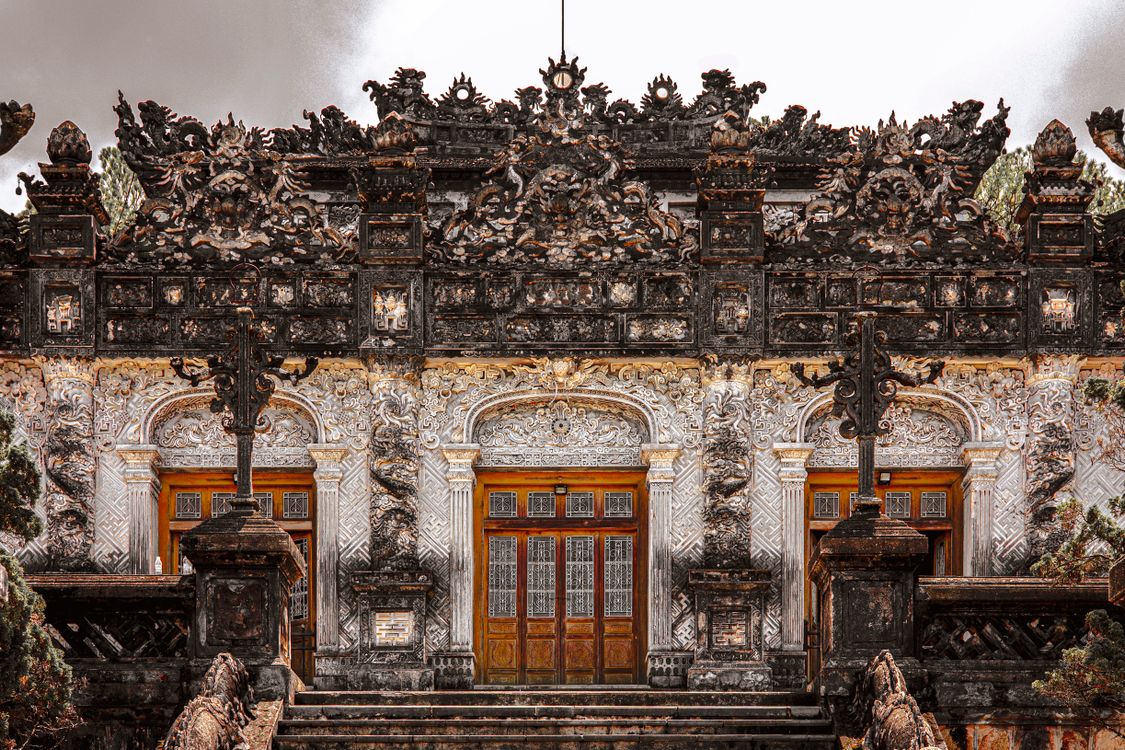
Three are worth your time: Tu Duc (the romantic one, with a lotus lake and the emperor’s own poems carved on stone steles), Minh Mang (grand and symmetrical, 40 monuments on a single axis), and Khai Dinh (the weird one — a mix of Vietnamese and European styles, covered in mosaics made from broken porcelain). If you only do one, do Khai Dinh. The mosaics are worth the trip alone.
Each tomb is 150,000 VND, or grab the 4-site combo — Imperial City plus all three tombs — for 530,000 VND, valid for two days. The tombs sit south of the city, 15 to 30 minutes apart by Grab or motorbike. Rent a bike for the day (around 150,000 VND) and you can chain all three comfortably between 8am and 2pm.
3. Thien Mu Pagoda + Dragon Boat on the Perfume River
The seven-story tower on the riverbank is the image on every Hue postcard, and for once the postcard is accurate. Thien Mu — “Heavenly Lady” — has stood here since 1601, and its octagonal tower is the tallest pagoda in Vietnam. Entrance is free, open roughly 7am to 5:30pm.
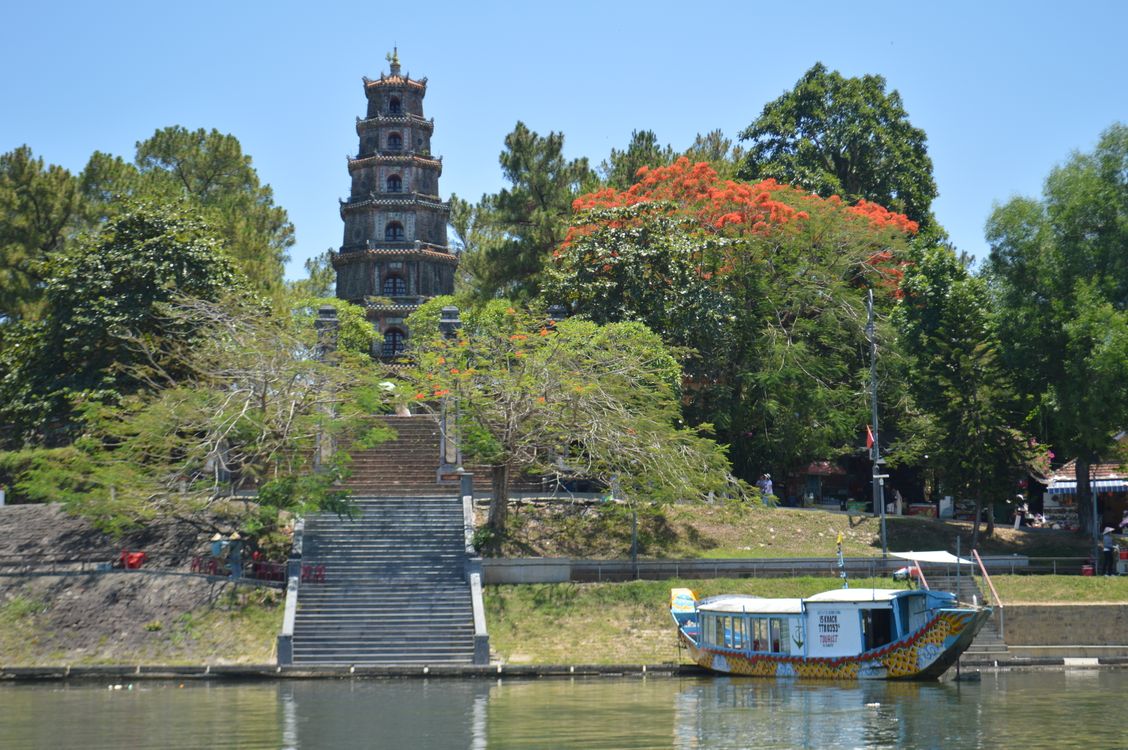
The classic move is to take a dragon boat up the Perfume River from the city center and arrive by water. Boats are negotiable — expect around 150,000–250,000 VND per boat for the round trip, including waiting time. It’s a 20-minute ride past river life, water buffalo, and floating gardens, and you land right at the pagoda steps.
One thing most guides don’t mention: the old Austin car parked in the compound. It’s the car driven by Thich Quang Duc, the monk who self-immolated in Saigon in 1963 in protest of the Diem regime. The pagoda keeps it as a memorial. It’s a heavy piece of history sitting in a very peaceful place.
4. Dong Ba Market
Start your day here. Seriously. Dong Ba is Hue’s biggest market, on the north bank of the Perfume River a five-minute walk from the Citadel, and breakfast is when it’s at its best.
The food section is the reason to come: bánh bèo (tiny steamed rice cakes), bánh khoái (crispy turmeric pancakes), bún bò, and chè (sweet soups). Vendors here are used to foreigners, which means prices are quoted higher than for locals — agree on the price before you sit, and it’s still cheap by any standard. A full breakfast for two runs about 100,000–150,000 VND.
For souvenirs, the dried goods and conical hats are a better buy here than anywhere in Hoi An — less markup, same product. And if you’re around on a weekend evening, the night market section near the river is worth a wander after dark.
5. Bún bò Huế & Royal Cuisine
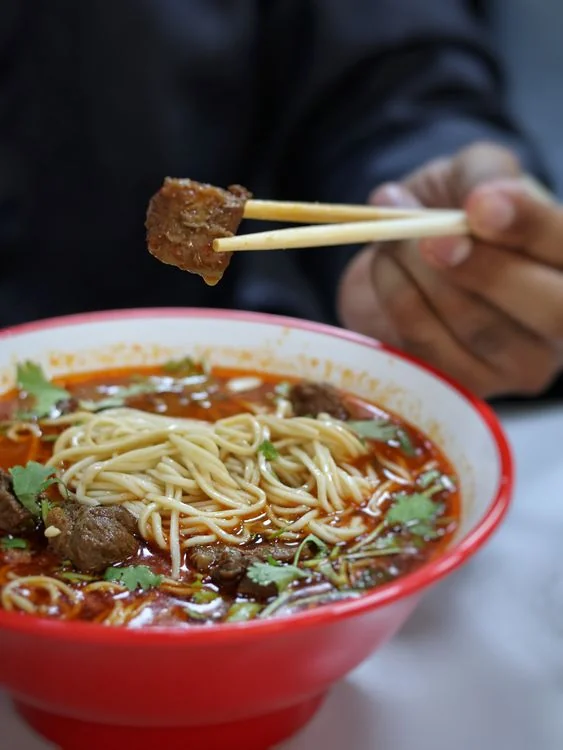
The broth smells like lemongrass, beef bones, and chili — and it delivers on all three. Bún bò Huế is Hue’s signature bowl: thick rice noodles, beef shank, pork hock, and a slick of red sate that builds slow, then kicks. A good bowl runs 40,000–80,000 VND depending on the shop, and it’s the closest thing the city has to a religion.
Hue’s food descends from imperial court cooking. Royal chefs had to impress emperors, and the whole city inherited the standard. Beyond the noodle soup, work through: bánh khoái (crispy pancake with shrimp), bánh bèo (steamed rice cakes), nem lụi (grilled pork skewers wrapped in rice paper), and cơm hến (baby clam rice — a Hue original).
And drink the salt coffee. Cà phê muối — coffee with salted cream — is Hue’s contribution to the Vietnamese coffee scene. Egg coffee belongs to Hanoi; this one belongs here. Every cafe in town does a version, and the good ones are around 35,000–50,000 VND.
6. Truong Tien Bridge at Night
Around 7pm the bridge lights up. Truong Tien has spanned the Perfume River since 1899, and at night it cycles through colors — blue, purple, gold — that reflect across the water. It’s free, it’s pretty, and it’s a 15-minute walk from anywhere in the city center.
Hue has also announced a plan for a 2027 light-and-drone festival on the Perfume River; the exact date and visitor arrangements are not confirmed.
Walk across and back — 20 minutes total — and grab a coconut or a kem at either end. On weekend evenings, the walking street nearby fills with food stalls, families, and kids on electric cars. Start at sunset and you get the change from dusk to full lights, which is the whole show.
7. Thanh Toan Covered Bridge
About 8km east of Hue is a covered bridge older than most of the buildings in Hoi An. Thanh Toan was built in 1776 — a tile-roofed wooden bridge over a canal, built for a village by a wealthy benefactor. It’s the kind of place Hoi An was 30 years ago.
It’s free, it’s a 20–30 minute Grab or motorbike ride from the center, and you’ll have the place almost to yourself. There’s a small village market beside it, rice fields all around, and an agricultural museum next door if it’s open. Great photos, zero crowds, and a genuinely different side of Hue. Budget half a day total with the ride there and back.
8. DMZ Day Trip — Vinh Moc Tunnels
This one’s heavy, and it should be. The DMZ — the Demilitarized Zone — was the strip of ground between North and South Vietnam during the war, and Hue is the launch point for tours into it. The highlight is Vinh Moc: a tunnel village carved into a cliff where more than 60 families lived for years while bombs fell overhead. You can walk through the actual tunnels, three levels deep.
It’s about 1.5 hours north of Hue in Quang Tri province. Tours usually also hit Hien Luong Bridge — the old dividing line at the Ben Hai River — and often Khe Sanh Combat Base or Quang Tri Citadel. Half-day tours run from about 1,200,000 VND (~$50), full-day group tours from about 1,500,000 VND (~$60).
Get a guide for this one — the history doesn’t explain itself, and the context is what makes it worth doing. If you only have a half day, prioritize Vinh Moc. The tunnels are the most visceral thing you’ll do in Central Vietnam.
Before You Go
- Go early to the Imperial City — the ticket booth is cash only, so bring VND with you.
- Buy the combo — 530,000 VND covers the Citadel plus all three tombs, valid two days. Worth it if you’re doing tombs at all.
- Rent a motorbike for the tomb day — around 150,000 VND/day, and the tombs are spread out.
- Stay two nights minimum — one day for Citadel + tombs, one for pagoda, market, and food.
- Beat the heat — August hits 33–35°C at midday. Do outdoor stuff before 10am and after 4pm.
FAQs — What Travelers Are Actually Asking
How many days do I need in Hue?
Two is the sweet spot. One day works if you only do the Citadel and a single tomb, but you’ll skip the pagoda, the market, and the food — which is the best part. Add a third day if you want the DMZ tour.
Is Hue worth visiting?
Yes. There’s a running Reddit thread called “Why doesn’t Huế get as much love as other Vietnamese cities?” — and the answers are all people saying it became their favorite stop in the country. It’s quieter than Da Nang, cheaper than Hoi An, and the food is better than either.
How do I get from Da Nang to Hue?
About two hours by road over the Hai Van Pass, by private car or motorbike — the coast views are the best stretch of road in Vietnam. The train is slower but scenic. If you’re flying in, Da Nang is the airport, and a private transfer up the coast handles the whole thing.
Can I do Hue as a day trip from Hoi An?
You can, but it’s a rushed 12-hour day and you’ll miss half of this list. Overnight is the move — Hue is cheaper than Hoi An anyway, so it usually balances out.
What do I do in Hue when it rains?
Eat. Hue is genuinely the best rainy-day city in Vietnam — markets, cafes (try the salt coffee), and museum-hopping inside the Citadel. Rain here is usually an afternoon shower, not an all-day washout.
Is the Imperial City worth 200,000 VND?
Yes — if you give it three hours and go at 8am. The scale doesn’t translate in photos. Just bring cash and water.
The Short Version
Hue isn’t a half-day stop. Give it two days: one for the Citadel and a tomb or two, one for the pagoda, the market, and bún bò Huế. It’s the most underrated city in Vietnam, and August is the right time to see it — dry, hot, and at its best.
If you’re planning a Central Vietnam run, we can help with the logistics. A Da Nang / Hoi An airport transfer gets you up the coast, and if you’re still deciding where to base yourself, this Hoi An vs Da Nang breakdown will save you a headache. And if you want a local guide who knows the city — especially for a food crawl or the tombs — check out MIA Hue Tours on Facebook. Tell them we sent you.
Got questions about fitting Hue into your Vietnam trip? WhatsApp/Zalo: +84 70 6666 520 — happy to help plan it.


Content summary
Other blogOther blog
Related blogs

What to Eat in Hue — 10 Dishes Locals Actually Eat
Hue is Vietnam’s food capital and criminally underrated. Here are 10 dishes locals actually eat — where to find them and what they cost.
Where to Stay in Hoi An — Best Areas & Hotels for Every Budget
Old Town or the beach? Here’s the honest breakdown of every Hoi An neighborhood — what each one is like, who it suits, and real hotels at real prices.
10 Best Things to Do in Ben Tre — Coconut Canals, Sunset Birds & Real Mekong Life
Only 85km from Saigon, Ben Tre is the Mekong at its most authentic. Here are 10 things to do — coconut canals, warm candy, sunset storks and food worth the drive.