



The Ha Giang Loop — Complete Motorbike Guide for 2026
Vietnam’s most famous motorbike ride, explained: route, costs, best time to go, and the honest answer to self-drive vs easy rider.
Vietnam has a few rides that travelers talk about for years after. The Ha Giang Loop is the one they talk about most. It’s a motorbike route through the far north of Vietnam, past limestone mountains, deep gorges, and villages where the Hmong, Tay, and Dao people have lived for generations. No tour bus does it justice. You have to ride it yourself, or ride pillion with someone who knows every corner.
The loop runs roughly 350 kilometers through Ha Giang province, about 300 kilometers north of Hanoi. Most people take three to four days. You sleep in homestays, eat with local families, and climb passes that make you forget about the cold wind on your face. It’s the kind of trip that rewires what you think Vietnam looks like.
Here’s what we found putting this guide together — the route, the costs, the best time to go, and the honest answer to the question everyone asks: self-drive or easy rider?
What Is the Ha Giang Loop?
The Ha Giang Loop is a circular road that starts and ends in Ha Giang City. The classic route goes: Ha Giang City → Quan Ba → Yen Minh → Dong Van → Meo Vac → Du Gia → back to Ha Giang City. It passes through the Dong Van Karst Plateau, a UNESCO Global Geopark — the first in Vietnam and only the second in Southeast Asia.

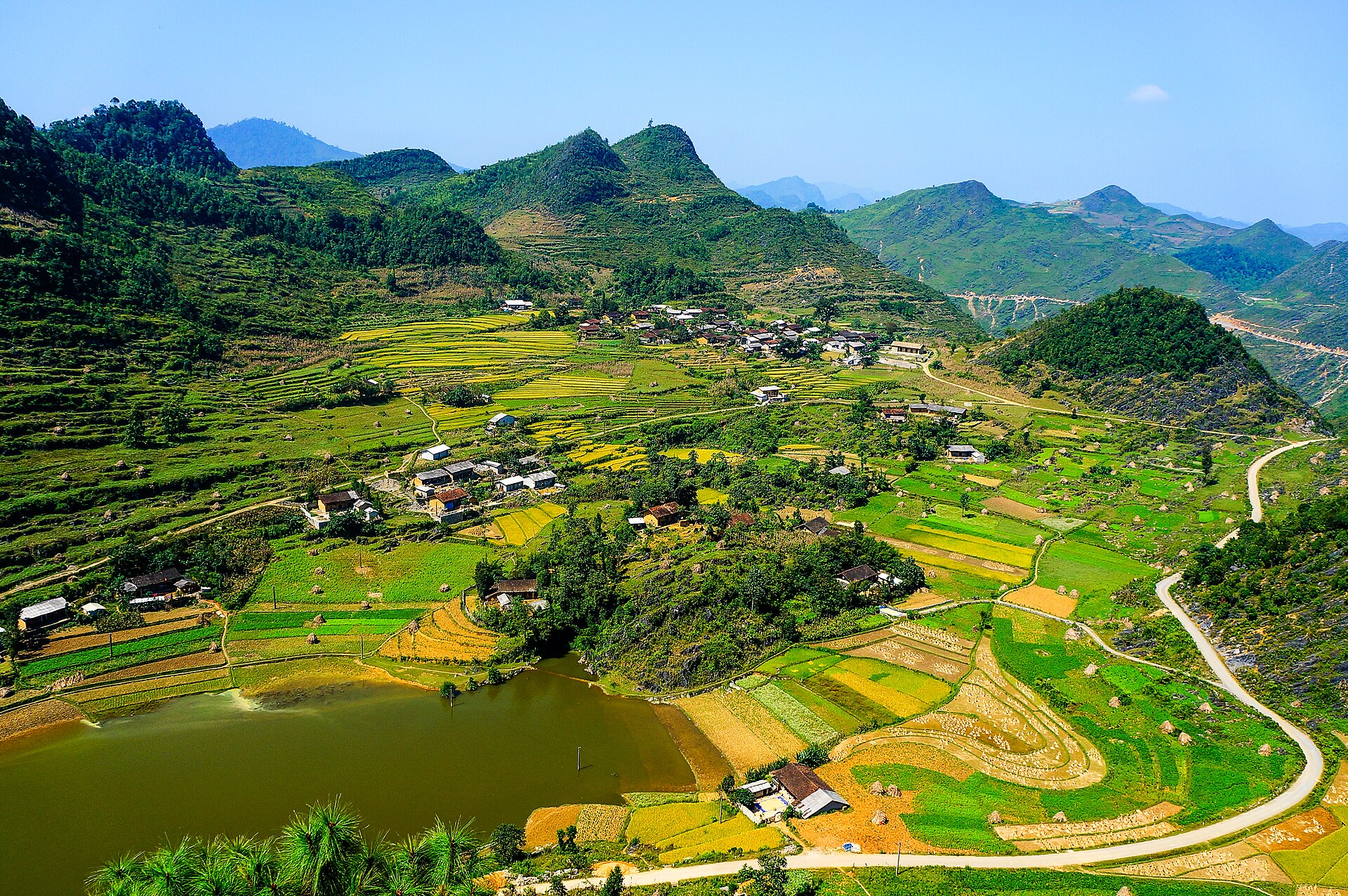
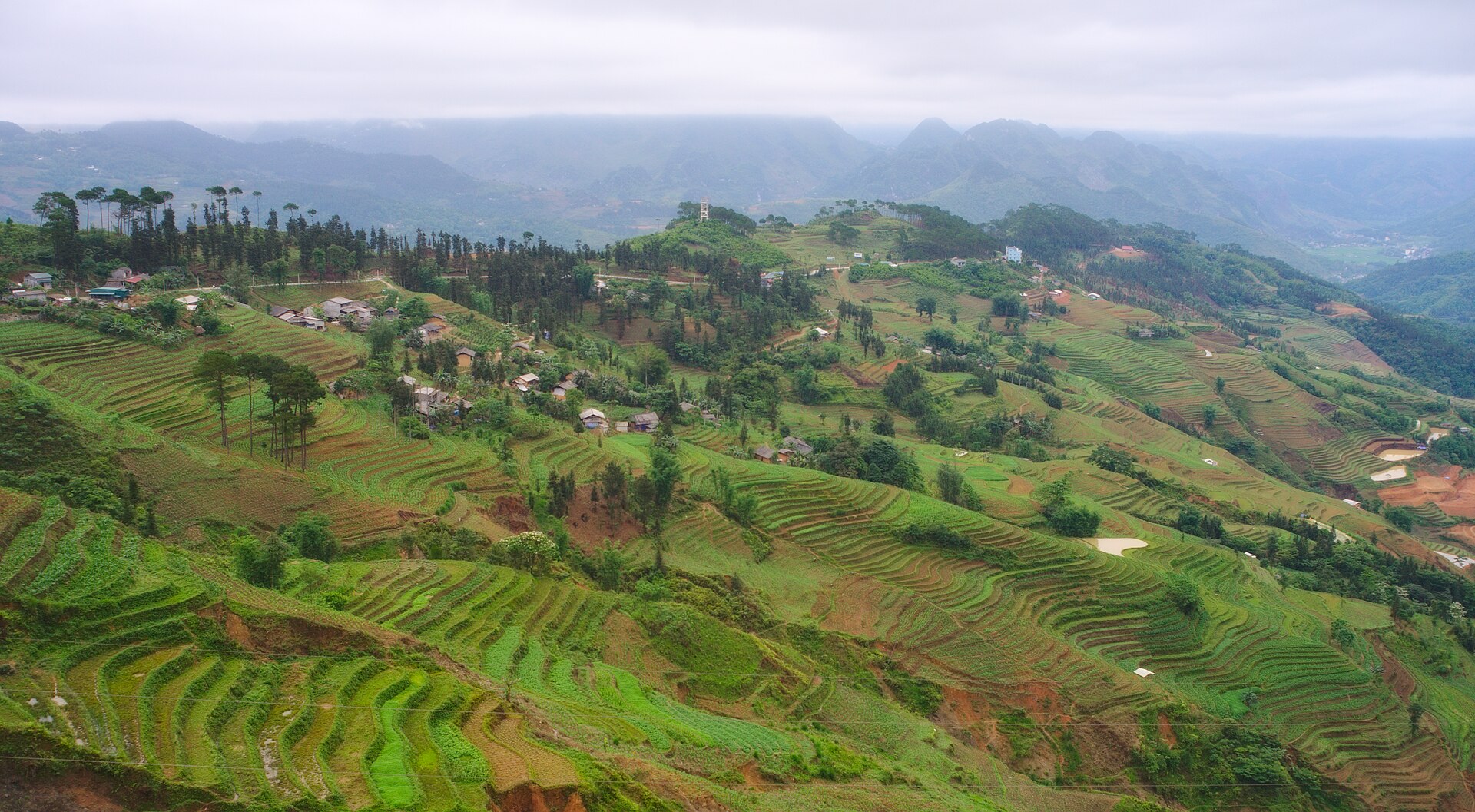
The scenery changes constantly. Terraced rice fields in Quan Ba. Pine forests near Yen Minh. The old town of Dong Van. The cliff-hugging Ma Pi Leng Pass above the Nho Que River. And Du Gia, a small village that feels like the quietest place on earth. Around 19 ethnic groups live in the province, and along the route you’ll see their markets, their clothes, and their daily life up close.
It’s not a smooth ride. Some sections are rough, some roads are under repair, and after rain there can be landslides. But that’s part of why people love it. The loop rewards slow riding and an open mind.
When to Go
The best windows are March to May and September to November. That’s when the weather is warm, the sky is clear, and the colors are at their best. October is the golden month — the rice terraces turn yellow and the buckwheat flowers bloom. We’ve seen it in early October and it’s genuinely one of the best road trips in Southeast Asia.

| Season | Weather | What it’s like |
|---|---|---|
| Sep – Nov | Dry, clear, warm days | Golden rice fields, buckwheat flowers. The postcard season — books out fastest. |
| Oct – Apr | Cool to cold, mostly dry | Flowers in spring, quiet roads in winter. Cold mornings on the bike. |
| Dec – Feb | Cold, misty | Dramatic but freezing — you need thermals and a thick jacket. |
| Jun – Aug | Hot, rainy | Lush green terraces but heavy rain and occasional landslides. Ride only if you don’t mind getting wet. |
If you only have one window, aim for late September to mid-October. The rice is gold, the days are dry, and the passes are clear. November is quieter and still dry — just cooler. March brings blossoms and mild weather, which is the second-best time.
How to Get There
The loop starts in Ha Giang City, about 300 kilometers north of Hanoi. There’s no airport in Ha Giang, so the practical options are:
- Bus from Hanoi (most common): Sleeper buses leave from My Dinh station in Hanoi and take 6–7 hours. Tickets run around 350,000–500,000 VND (about $15–20). Book the night bus and you arrive in the morning ready to ride.
- Private car: Faster and more comfortable, but much pricier — figure 4,000,000–8,000,000 VND ($160–320) depending on the car and how many people split it.
- Rent in Hanoi and ride up: A solid 7-hour ride on good roads. Only worth it if you’re doing a bigger northern Vietnam motorbike trip.
Once you’re in Ha Giang City, motorbike rental shops cluster around Nguyen Thai Hoc Street on the east side of the river. Rentals run about 150,000–300,000 VND per day for a decent 125–150cc bike. Look for a shop with a printed price list, good helmets, and staff who speak some English. Ask when the bike was last serviced and take it for a 10-minute test ride before you commit.

Self-Drive vs Easy Rider vs Tour
This is the question that comes up in every travel forum, and there’s no single right answer. It depends on your riding experience and how comfortable you are on unfamiliar mountain roads. Here’s the honest breakdown.
| Option | Cost | Who it’s for | The catch |
|---|---|---|---|
| Self-drive (rent a bike) | 150,000–300,000 VND/day + fuel + homestays | Confident riders who want freedom and control | You handle navigation, breakdowns, and bad weather alone. |
| Easy rider (you ride pillion) | 1,000,000–1,500,000 VND/day, all-inclusive | Anyone, especially first-timers and non-riders | You don’t control the bike — but you see everything. |
| Small group tour | 2,500,000–4,500,000 VND for 3–4 days | Solo travelers who want company and a guide | Less freedom, fixed itinerary, group pace. |
Self-drive is cheaper and, for a confident rider, the best way to experience the loop. You stop where you want, ride your own pace, and feel the road under you. The flip side: the mountains make their own weather. You can leave Ha Giang City in clear skies and be in dense mist 90 minutes later. If you’re not used to switchbacks, hairpins, and the occasional gravel patch, it can be a lot.
Easy rider means a local guide drives and you sit behind them. It costs more but you get to actually look at the scenery instead of staring at the road. Guides know the viewpoints, the homestays, and how to handle police checks. For someone visiting Vietnam for the first time, it’s often the difference between a great trip and a stressful one. Don’t treat it as a step down — it’s the version that makes the trip work for a lot of people.
Small group tours split the difference: you ride your own bike but stay in a convoy with a lead and a sweep rider. The operator handles navigation and logistics, you keep the feeling of riding. Good middle ground if you’re confident but new to Vietnam.
Route & Itinerary
Three days is doable but rushed. Four days is the sweet spot — you ride less per day and actually stop for things. Here’s a classic four-day version:
Day 1: Ha Giang City → Quan Ba → Yen Minh (about 100 km)
Heaven’s Gate viewpoint and the Twin Mountains of Quan Ba come early, and they set the tone. Rice terraces and valley views all the way to Yen Minh, where you sleep.
Day 2: Yen Minh → Dong Van (about 80 km)
Lung Cu Flagpole, the northernmost point of Vietnam, is a detour worth taking. Dong Van Old Quarter is a genuine old town with a Sunday market that’s the real deal. The Hmong King’s Palace (Vuong Family Residence) is nearby — a stone mansion from the 1920s.
Day 3: Dong Van → Meo Vac via Ma Pi Leng Pass
This is the day everyone remembers. Ma Pi Leng Pass clings to the cliff for several kilometers with a vertical drop on the right. Stop at the viewpoint, look down at the Nho Que River, and take the boat ride through Tu San Canyon if you have time. Sleep in Meo Vac.
Day 4: Meo Vac → Du Gia → Ha Giang City
The road to Du Gia is smaller and rougher but quieter. Du Gia village is worth a coffee stop. From there it’s a relaxed ride back to Ha Giang City, where the loop closes.
If you have five days or more, the extended version adds Bao Lac, Xin Man, and Hoang Su Phi — even more remote, even fewer travelers. Some riders continue east to Cao Bang for the Ban Gioc Waterfall, which is a whole other trip worth planning.
What You’ll See Along the Way
- Ma Pi Leng Pass: The most beautiful mountain pass in Vietnam, according to everyone who rides it. Cliff road, deep gorge, Nho Que River below.
- Lung Cu Flagpole: The northernmost point of Vietnam. A 30-meter flag tower on a hill, with China visible in the distance on clear days.
- Dong Van Old Quarter: A small, atmospheric town of old houses and a lively Sunday market.
- Vuong Family Residence: A stone mansion built in the 1920s for a Hmong king, mixing Chinese, French, and Hmong architecture.
- Heaven’s Gate & Twin Mountains: The classic first photo stop, looking over Quan Ba valley.
- Du Gia: A tiny village with homestays, waterfalls, and almost no one else around.
- Ethnic minority markets: Khau Vai Love Market (spring), Dong Van Sunday Market, Meo Vac Sunday Market. Markets are the easiest place to see local life up close.
Food on the loop is simple and good. Try five-color sticky rice, buckwheat cake, thang den (glutinous rice balls in ginger syrup), and au tau porridge. Homestays usually cook dinner for you if you ask the day before — that’s the meal worth planning around.
What It Costs
| Item | Price (VND) | Notes |
|---|---|---|
| Bus Hanoi → Ha Giang | 350,000 – 500,000 | Sleeper bus, 6–7 hours, from My Dinh station |
| Motorbike rental | 150,000 – 300,000/day | 125–150cc; ask about service history |
| Fuel | 150,000 – 250,000 total | About 350 km of riding, fuel is cheap |
| Homestay | 100,000 – 250,000/night | Usually includes breakfast |
| Dinner at homestay | 80,000 – 150,000 | Ask in advance |
| Easy rider tour | 1,000,000 – 1,500,000/day | Guide + bike + fuel + homestays |
| 4-day small group tour | 2,500,000 – 4,500,000 | All-inclusive, English-speaking guide |
A solo self-drive trip runs about 2,000,000–3,000,000 VND total for four days, all in. An easy rider tour is roughly double. For a company like us, when clients ask about the north, we always quote them the honest range and let them pick — the loop is one trip where cheap usually means a worse bike, and a worse bike means a worse time.
Before You Go
- Licence: Riding without a valid licence is illegal. You need a Vietnamese licence or an International Driving Permit issued under the 1968 Vienna Convention. Police checkpoints exist and they do check.
- Permit: The old requirement for a travel permit in northern Ha Giang has been dropped — as of 2026 you don’t need one for the loop. Double-check with your homestay or tour operator before you go, because rules can change.
- Insurance: Read your policy before you ride. Some travel insurance excludes motorbikes above 125cc, or only covers you as a passenger. If it doesn’t cover you on a bike, the loop is the wrong place to find out.
- Deposit: Rental shops take ID as deposit. Resist leaving your passport — take photos or photocopies instead. You’ll need the passport for homestay check-ins.
- Packing: Layers. It’s warm in the valleys and cold on the passes. A rain jacket, gloves, and a real helmet (not a half-shell) are non-negotiables.
- Cash: ATMs exist in Ha Giang City, Dong Van, and Meo Vac, but not in the villages. Carry enough cash for a few days.
FAQs — What Travelers Actually Ask
Is the Ha Giang Loop safe?
It’s as safe as you make it. Roads are narrow and winding, weather changes fast, and after rain there can be landslides. Most accidents are low-speed drops on gravel. If you’re an experienced rider, it’s manageable. If you’re not, take an easy rider and let a professional handle the road.
How many days do I need?
Three days minimum, four is the sweet spot. Five to seven if you want the extended loop through Bao Lac and Xin Man, or to continue to Cao Bang.
Do I need a motorcycle licence?
Yes. A valid licence or an International Driving Permit under the 1968 Vienna Convention is required, and police checkpoints do check. Your travel insurance probably requires it too.
Can I do it solo?
Plenty of riders do. If you’re confident on a bike in foreign mountains, solo gives you total freedom. If it’s your first multi-day ride, a small group or easy rider is the safer call.
Is it worth doing in the rainy season?
Only if you don’t mind getting wet and your operator is comfortable rerouting. The terraces are lush green in summer, but landslides and mist make it a different, harder trip. Pick September–November or March–May if you can.
What if my bike breaks down?
Reputable rental shops give you a contact number and arrange a swap or repair. Roadside mechanics in every village on the loop handle basic fixes cheaply. If you booked with a tour operator, breakdowns are their problem, not yours — one of the strongest arguments for booking with a real operator.
The Short Version
The Ha Giang Loop is the best motorbike ride in Vietnam, full stop. Go between September and November for golden rice and clear passes, or March to May for flowers and mild weather. Give it four days. Sleep in homestays. Eat the five-color sticky rice. And be honest about your riding skill — if you’re not confident on mountain switchbacks, pay for an easy rider instead of risking it alone. The views are the same either way; the difference is whether you enjoy them or white-knuckle them.
Planning a Vietnam trip? Sort your visa before you fly, and check our guide to getting around Vietnam — buses, trains, and private cars between cities. The loop is the north’s big adventure; start it from Hanoi, and if you have extra days, Sapa is a different kind of mountain town worth seeing. Questions about your itinerary? WhatsApp/Zalo: +84 70 6666 520.
Content summary
Other blogOther blog
Related blogs

What to Eat in Hue — 10 Dishes Locals Actually Eat
Hue is Vietnam’s food capital and criminally underrated. Here are 10 dishes locals actually eat — where to find them and what they cost.
Where to Stay in Hoi An — Best Areas & Hotels for Every Budget
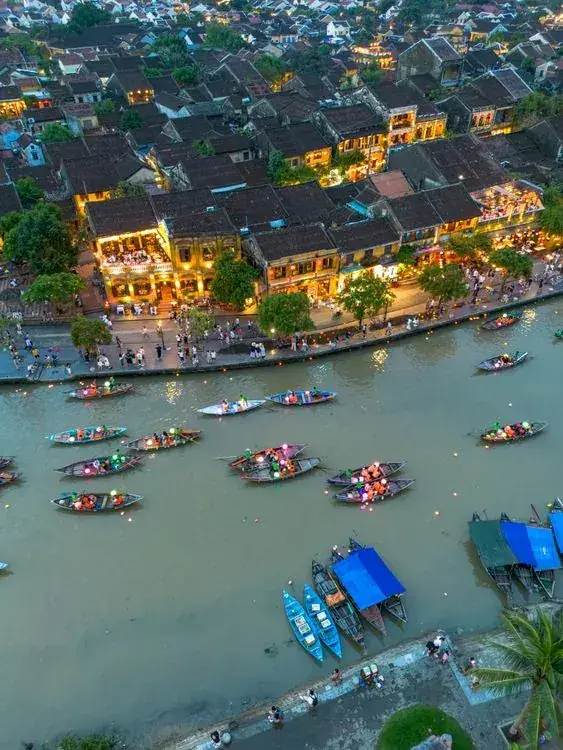
Old Town or the beach? Here’s the honest breakdown of every Hoi An neighborhood — what each one is like, who it suits, and real hotels at real prices.
10 Best Things to Do in Ben Tre — Coconut Canals, Sunset Birds & Real Mekong Life
Only 85km from Saigon, Ben Tre is the Mekong at its most authentic. Here are 10 things to do — coconut canals, warm candy, sunset storks and food worth the drive.