






Sa Dec Flower Village: Visiting the Nurseries, Not Just the Blooms
Flowers leave Sa Dec for markets before Tet, and the nurseries keep working afterwards. Learn what to ask about blooms, access and garden activities before you visit.
Sa Dec Flower Village is a place where flowers are grown for sale, not a permanent display arranged for visitors. That is the first thing to understand before travelling there for the pictures. The dense rows of colour seen in pre-Tet photographs depend on what growers are producing, when plants flower and when buyers collect them.
You can still find a reason to visit outside that busy period: ornamental plants are grown through the year, and some gardens have developed cafés, photo areas and agricultural experiences. But a working nursery, a visitor garden and a flower festival are three different things. Ask which one your visit includes.
The flowers have a deadline that is not yours
Tet, the Vietnamese Lunar New Year, brings strong demand for flowers and ornamental plants. Sa Dec growers prepare stock for homes, businesses and markets elsewhere. The weeks beforehand can be especially interesting, but the holiday itself is not a guarantee that the fullest rows will still be waiting in the nursery.
Vietnam News has documented flowers being loaded onto boats and trucks before Tet; VnExpress’s photographs show the growing and preparation work behind those sales. Those reports describe particular past seasons, not a fixed schedule for your trip. Their useful lesson is to ask about dispatch as well as bloom. A plant can be ready to photograph one week and on its way to a market the next.
If the flowers are your main reason for making the journey, ask your accommodation or the garden: what is flowering on my dates, will it still be there, and which area is open to visitors? A recent photograph from the actual property is more useful than an undated village-wide promotional image. A named festival also needs its own current programme; do not assume that a previous year’s dates apply.
Look below the blooms
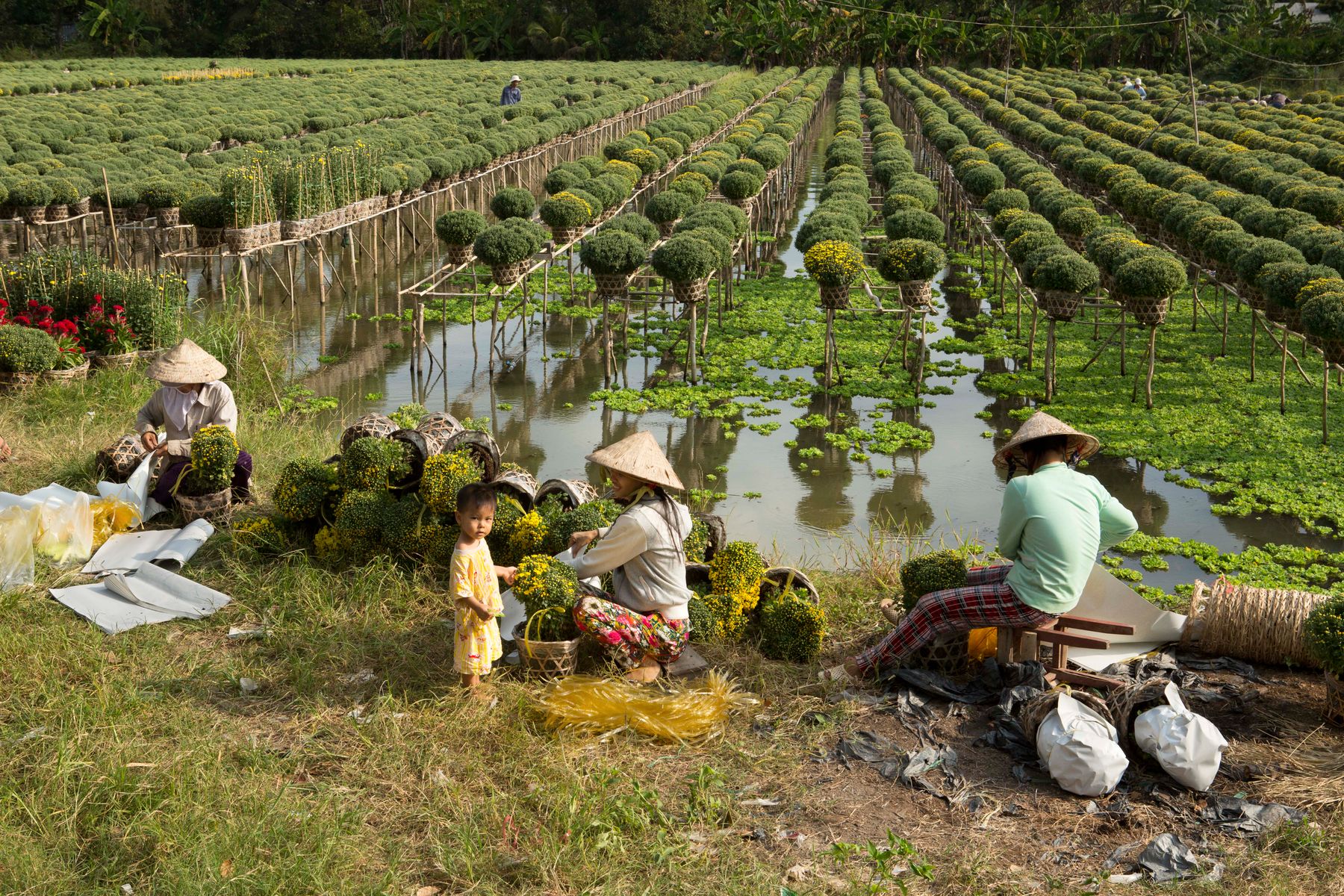
The raised growing beds are part of what makes the village interesting. Flowers are commonly arranged on elevated shelves or trellises above water. Voice of Vietnam describes growers using boots or small boats to reach the plants, a cultivation method associated with low-lying land that can flood.
Once you notice that system, the visit becomes more than a search for the brightest backdrop. Look at how pots are arranged, how a grower reaches the rows and how plants are tended before sale. Different nurseries may be working with different crops and stages of growth. A plot of green plants is not necessarily a failed flower display; it may simply be doing its job.
The craft has cultural significance too. Voice of Vietnam reported that the Ministry of Culture, Sports and Tourism recognised Sa Dec’s flower and ornamental-plant cultivation as National Intangible Cultural Heritage. The recognition concerns the cultivation craft. It is a reason to pay attention to the growers’ knowledge, not a promise that every plot is now a public attraction.
Choose an actual visitor arrangement
An official Tourism Information Technology Center overview describes both flower production and gardens offering visitor experiences, photo zones, cafés and homestays. This is a useful distinction when you are choosing where to go.
For a straightforward visit with somewhere to sit and take photographs, a garden that explicitly welcomes tourists may be the better fit. Confirm what is included in its current admission price and whether any activity requires a separate booking. Do not assume a café purchase includes access to every growing area.
If your interest is horticulture, ask for a visit to a working nursery where the owner agrees to explain the plants or techniques. Watering, arranging flowers or taking a boat between beds may be offered at some sites, but a list of possibilities on a tourism page is not a reservation. Confirm the activity, language, duration and availability before you pay.
Ask permission before entering a work plot or photographing someone closely. Keep paths clear for people moving plants, avoid touching blooms without an invitation, and never climb onto growing benches for a picture. The stock has a buyer and the structures are work equipment, not posing platforms.
A visit outside the pre-Tet rush
Outside the main holiday sales period, go with a narrower expectation: a look at a cultivation area, time in one garden that is open and a meal or drink nearby. Year-round production does not mean every variety flowers continuously, and it does not mean all visitor activities run daily.
Before setting out, search the Vietnamese name Làng hoa Sa Đéc and get the exact pin for the garden you have chosen. A broad village pin is not the same as a booked entrance or a confirmed meeting point. Send the pin to your driver and agree where the return pickup will be.
Allow an unhurried morning or afternoon rather than building the day around a promised number of stops. That is a planning recommendation, not a fixed visit duration. If your main interest is taking photographs, discuss the light and current displays with the garden; if it is learning about cultivation, prioritise a time when someone is available to talk.
Wear shoes with grip that you do not mind getting dirty. Waterways, narrow work areas and rain can change how easy a route is to walk. For a wheelchair, pushchair or anyone who finds uneven paths difficult, ask the specific property about the route from parking to the garden, seating and toilet access. A photograph of a flat entrance cannot establish that the whole visit is step-free.
Make time for Sa Dec beyond the growing beds
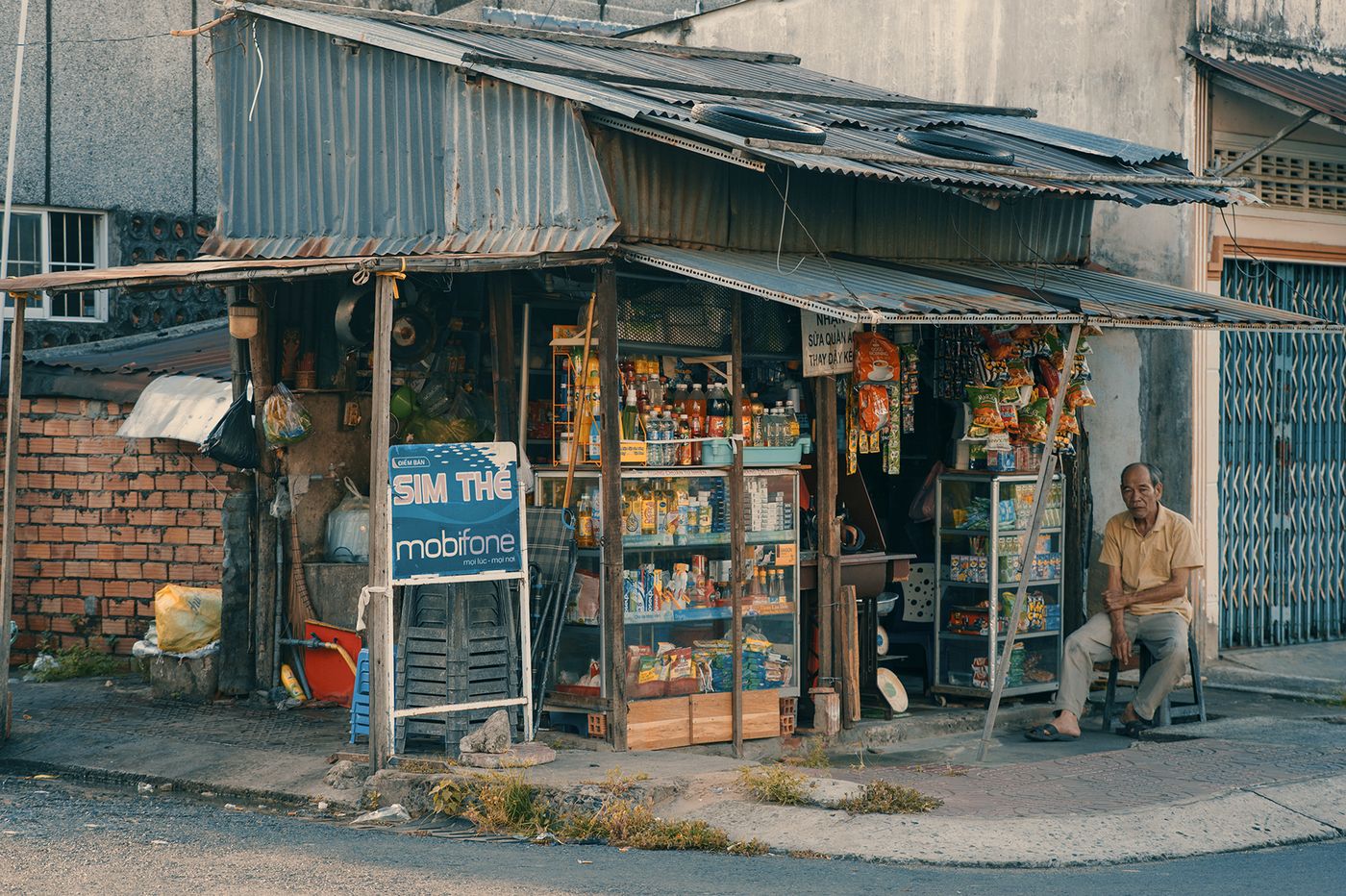
A town break is a useful contrast after the nurseries. Rather than buying access to several similar photo gardens, leave room for a drink, a meal and a look at the streets. The shopfront and river photographs below show another side of Sa Dec: a working town, not just a seasonal flower backdrop.
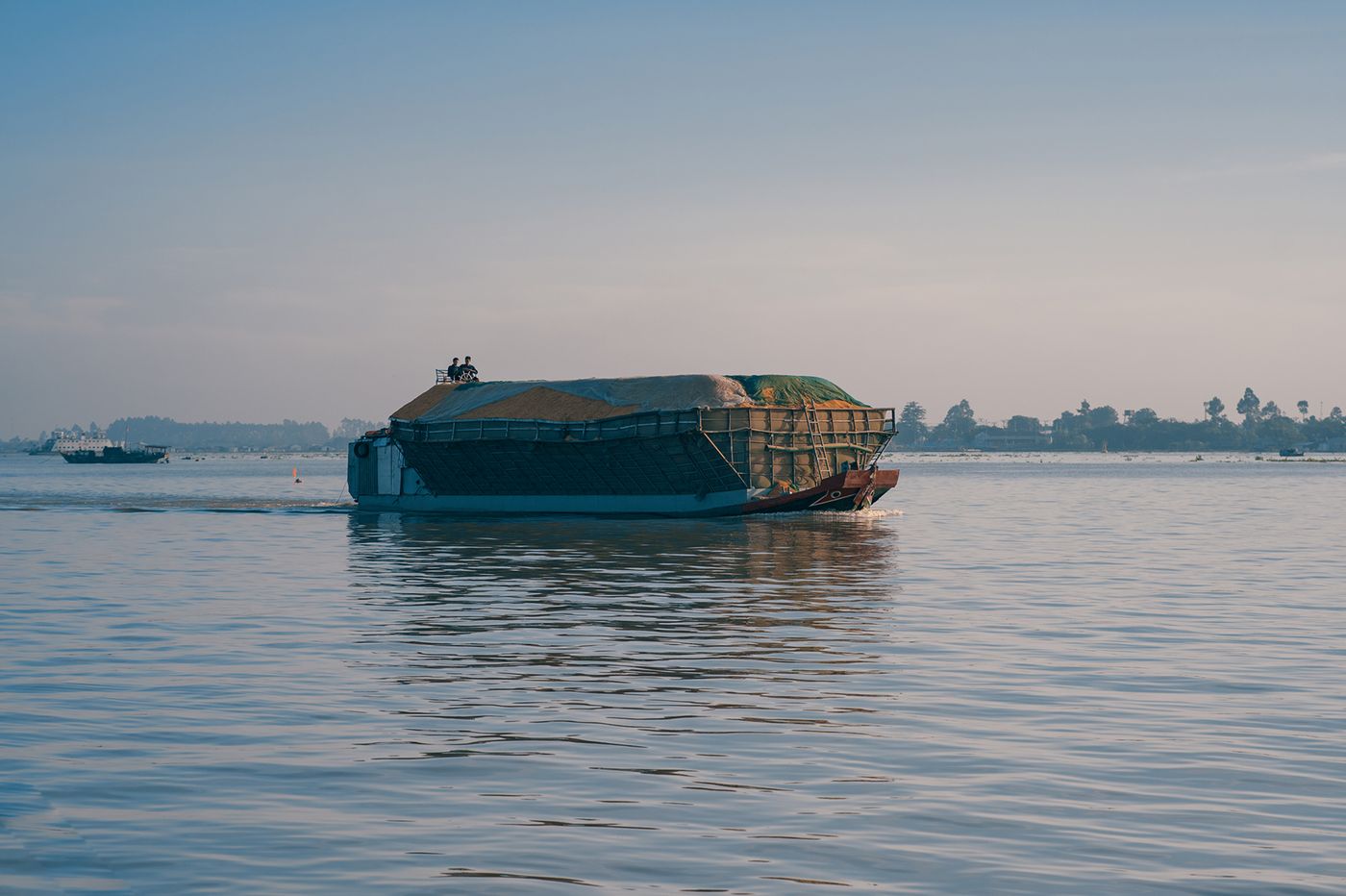
The river is also part of that wider setting. A cargo barge in Sa Dec should not be confused with a bookable tourist boat or assumed to be carrying flowers. If a boat experience is important to you, ask for the exact departure point and what the trip actually covers. Watching commercial river traffic and joining an organised visitor activity are different experiences.
For a longer stay in the area, our guide to Cao Lanh and its surroundings covers a separate set of city and wetland visits. Check the travel between places rather than treating everything in Dong Thap as one compact outing.
What to confirm before committing to the visit
The essential questions are specific: which garden, what is growing now, who admits visitors, what is included, and how will you get back? Confirm the current price in VND with the property. We have not verified a single village-wide ticket, fixed opening timetable or guaranteed walk-in workshop, so none is promised here.
Sa Dec works best when your expectations match what the gardens are doing. Visit near Tet for the possibility of a busy flower-trading scene, after checking the growers’ schedules. Visit at another time if the nursery craft and a quieter garden stop interest you in their own right. In either case, let the flowers be a crop as well as a photograph.
Sources and scope
This guide is research-led, not a claim of a firsthand visit. The Tourism Information Technology Center’s Sa Dec overview supports the distinction between production and visitor gardens. Voice of Vietnam’s village report describes cultivation methods; its craft-heritage report supplies the recognition context. VnExpress’s nursery photographs and Vietnam News’s pre-Tet report document past production and shipping. Their historical prices, annual dates and temporary restrictions are not current visitor instructions.


Content summary
Other blogOther blog
Related blogs

What to Eat in Hue — 10 Dishes Locals Actually Eat
Hue is Vietnam’s food capital and criminally underrated. Here are 10 dishes locals actually eat — where to find them and what they cost.
Where to Stay in Hoi An — Best Areas & Hotels for Every Budget
Old Town or the beach? Here’s the honest breakdown of every Hoi An neighborhood — what each one is like, who it suits, and real hotels at real prices.
10 Best Things to Do in Ben Tre — Coconut Canals, Sunset Birds & Real Mekong Life
Only 85km from Saigon, Ben Tre is the Mekong at its most authentic. Here are 10 things to do — coconut canals, warm candy, sunset storks and food worth the drive.