




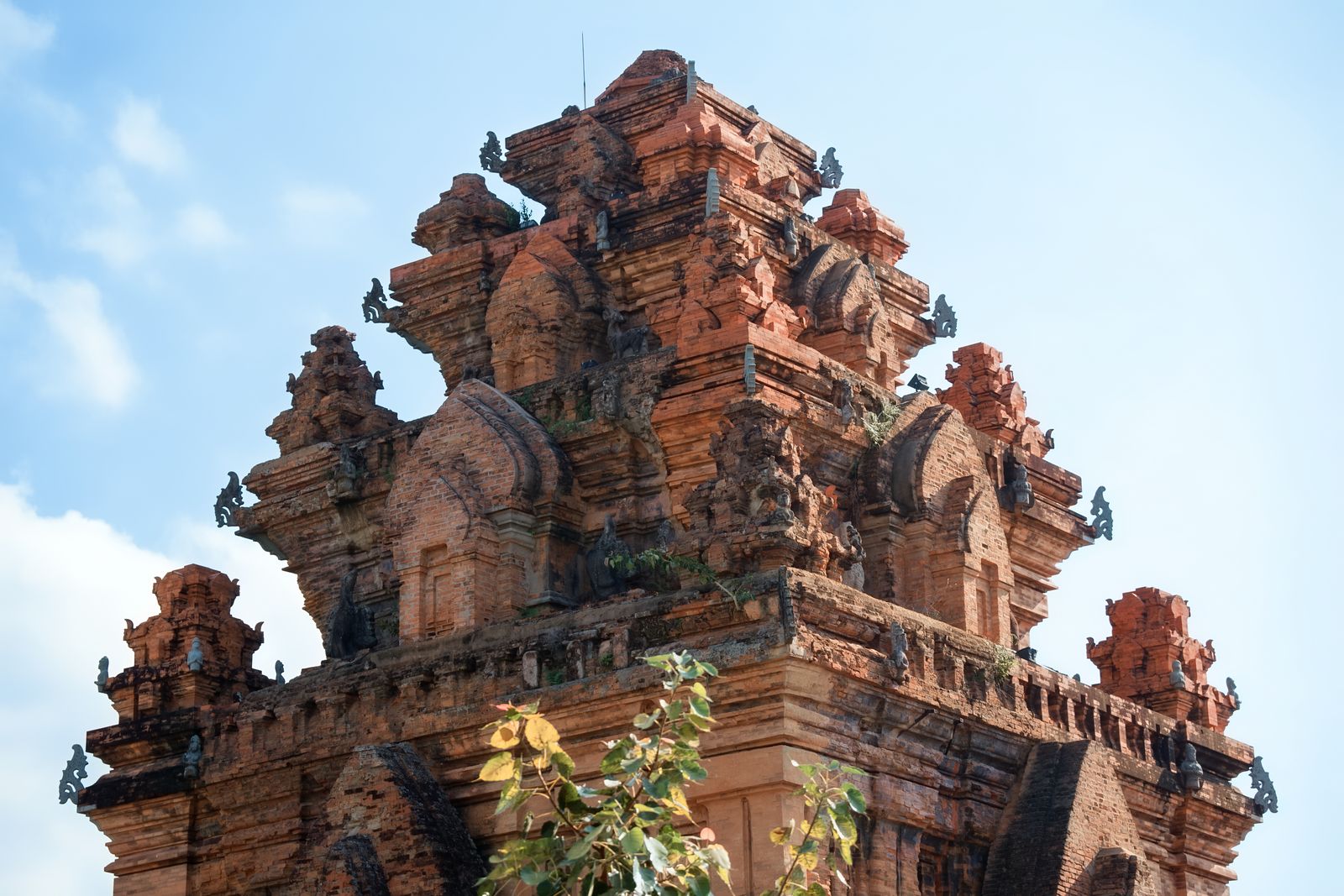


Best Things to Do in Ninh Thuan, Vietnam — Beaches, Cham Towers & Vineyards
Ninh Thuan is Vietnam’s driest province — sun nearly all year while the rest of the country rains. Here are the best things to do, from Vinh Hy Bay to Cham towers and vineyards.
Most travelers skip Ninh Thuan entirely. They drive straight past it on the road north from Ho Chi Minh City, heading for the Gulf and Nha Trang, and never notice the province wedged in between. Their loss. Ninh Thuan is Vietnam’s driest spot — barely two seasons, sun almost every day — so when the rest of the country is getting hammered by monsoon, this stretch of south-central coast stays stubbornly bright.
That alone would be worth the detour. But the province isn’t just a sunny pit stop. You’ve got one of Vietnam’s most photogenic bays, a UNESCO biosphere reserve that barely gets visitors, 13th-century Cham towers that look straight out of a fantasy film, the oldest pottery village in Southeast Asia — and, of all things, working vineyards.
We’ve narrowed it down to the eight things genuinely worth your time, with prices in VND, what to expect, and the small details that make the trip. Go in August. This is the place that stays dry.
1. Vinh Hy Bay — Snorkel, Boat, and Eat on the Water
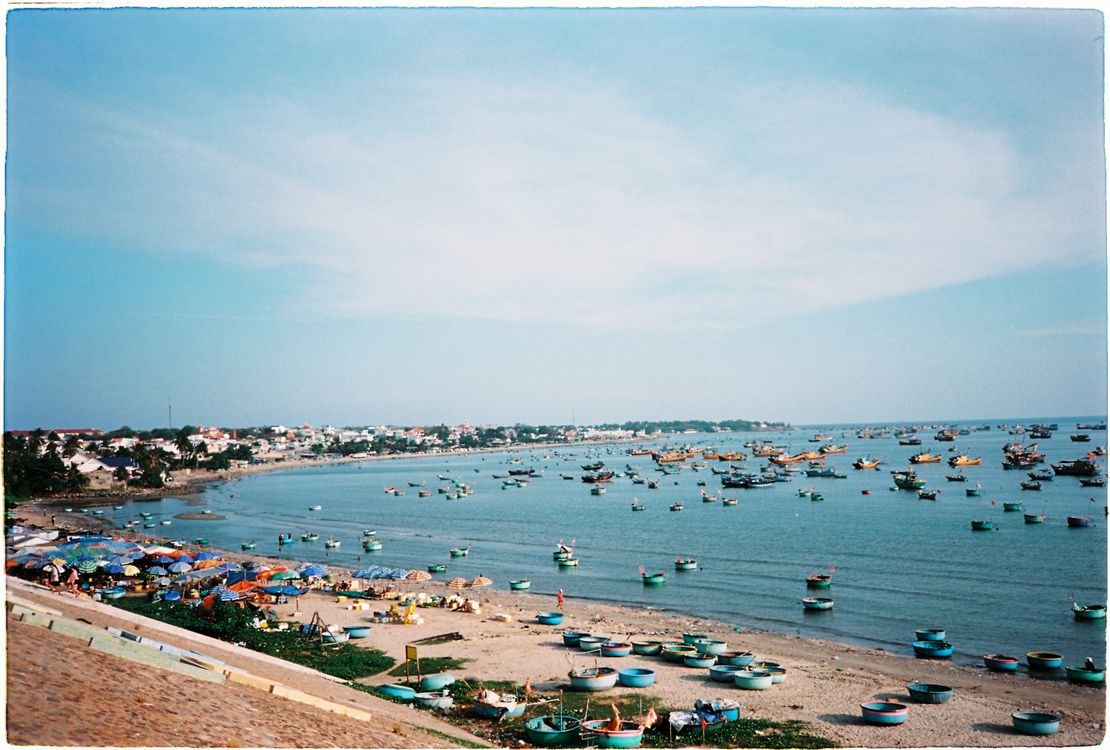
The bay at Vinh Hy looks the way you picture Vietnam’s coast before you’ve ever been here. Rock faces wrapped in dry scrub, clear green water, a knot of fishing boats off the pier. A shared boat out onto the bay runs a few hundred thousand dong for a full loop, and it’s worth it. The water is the cleanest you’ll find this far south, and the coral near the rocky points is alive in a way it isn’t at the crowded north coast beaches.
Plan for the morning. Tour buses roll in from Nha Trang around 11, and by noon the pier is a scrum. Get there for the 9am boats and you’ll have the bay mostly to yourself. When you’re back on land, the floating seafood restaurants serve what came in off those boats that same morning. The squid’s the one to order.
2. Hang Rai — Snorkel That Doesn’t Need a Boat
No boat required at Hang Rai. A short scramble down a rocky path drops you onto a headland that waves have carved into natural saltwater pools — clear, shallow, and full of fish. You can snorkel right off the rock. Late morning the stone’s warm enough to lie on, and the water’s so still you can read the creatures below without a mask.
It’s not a big area. Give it an hour or two. That’s about right. And bring proper shoes — the rock edges are sharp and you’ll want grip on the way down to the ledge.
3. Nui Chua National Park — a Rare Dry Forest, No Crowds
Nui Chua doesn’t get the same stampede as the Gulf’s other parks, and that’s the whole point. It’s a UNESCO biosphere reserve that protects a dry, deciduous forest found almost nowhere else in Vietnam. Snakes of pale bark trees, sharp scrub, and views that open over the whole coastline. The main haul, the trail up to Mount Hon Do, takes about three hours and rewards you with the entire peninsula on both sides.
Bring your own water — you won’t find a shop once you’re in. There’s a visitor entry point around the reserve, and the guides posted nearby are worth the fee. We did the short loop first and gave the big hike a miss in the heat. June, it was. Go as early as you can; the heat’s real.
4. Po Klong Garai Cham Towers — a 13th-Century Kingdom on a Hill
About seven kilometers out of Phan Rang, a stone tower complex sits on a low rise and looks older than anything that belongs in the ordinary world. These are the last standing pieces of the Cham kingdom, a realm that controlled this stretch of coast for centuries. The walls, the carved lintels, the lotus-bud towers — you climb the main three and watch the whole plain spread out below.
Where: Po Klong Garai Cham Towers, about 7 km north of Phan Rang-Thap Cham
Entry: around 20,000 VND for adults, 10,000 VND for kids
Tip: go 30 minutes before sunset, when the low light turns the stone bronze and the crowds have gone.
Around the towers the local Cham community measures time by a calendar of its own. If you happen to be here in late September through early October, the Kate festival takes over the site for several days of ceremonies and thanksgiving. Worth timing a visit around if you can.
5. Bau Truc Pottery Village — Hand-Thrown Pots Since Longer Than Anyone Remembers
Bau Truc claims to be one of the oldest pottery villages in Southeast Asia, and looking at the place, you believe it. For centuries the Cham people have been digging local clay here and shaping pots by hand — no wheel, just the ancient pinch-and-coil technique. UNESCO named it intangible heritage for a reason.
About ten kilometers from Phan Rang, the village offers a chance to watch practiced hands work clay into graceful jars, and to buy one to take home. Expect to pay a few hundred thousand VND for something large and worth carrying. Bring cash; nobody here will take plastic.
6. The Vineyards — Yes, Vietnam Has a Wine Region, and It’s Here
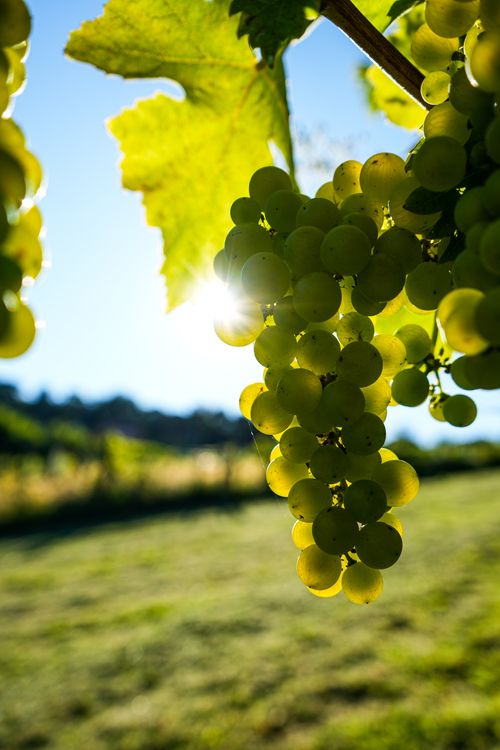
Ninh Thuan is the grape capital of Vietnam. The vines arrived from the 1960s, and today the province produces the bulk of the country’s table grapes and much of its wine. Roughly twenty small vineyards are open to visitors. Several of the farms have bottles on offer and occasionally the grape-juice breakfast you didn’t know you needed.
Two names you’ll hear: Ba Moi and Thai An, both open to the public and both happy to show you the rows, let you taste, and sell you a bottle. The wineries up in Dalat age their wine here — the province’s dry, two-season climate is what the vines need.
7. The Salt Fields — a White Plain Bright as Snow
South of Phan Rang, the salt flats shimmer in the dry air like a snowdrift that fell from nowhere. Saltwater sits in shallow ponds, thick with a salt crust up to knee-depth, and at harvest (usually December through May) the workers rake it up in mound after mound while you watch. Even outside the harvest, the long dykes between the ponds make a strange and beautiful walk — bright white, absolutely flat, and eerily quiet.
A driver’ll know exactly which pond to show you. It catches the sky unusually well in dry season. No fee, but pack sunscreen — salt and sun double down.
8. Nam Cuong Dunes & the An Hai Coast — Empty Beaches With Actual Quiet
The coast above Phan Rang is a string of empty, out-of-the-way beaches that get maybe a twentieth of the crowds you’ll find near Nha Trang. Nam Cuong is the standout — a drift of pale, pinkish sand dunes whose slopes catch the wind and the light. A little further on, the An Hai coastal road curls along the shore with only the occasional fisherman for company. Empty. Low-key. Most of it free.
This is the part to include even if you only have a day. The spots spread about 100 km from Nha Trang, the nearest big travel hub, and you can wrap them all in a single loop from Phan Rang — dunes, bays, towers, pottery, salt, and back.
Before You Go
Five quick things that actually matter, learned the hard way:
- Fly in — the nearest big airport is Cam Ranh (Nha Trang), a 2-3 hour drive away. From Ho Chi Minh City it’s roughly 350 km, six-plus hours — a destination, not a pit stop.
- Rent wheels — the good spots are spread out. A scooter (from about 150,000 VND a day) or a car is the difference between seeing two things and seeing all eight.
- Go early — August mornings at Vinh Hy and Nui Chua are calm and cool-ish. By 1pm the sun will roast you. Everything’s emptier before 10, too.
- Cash is king — pottery sellers, salt workers, small seafood joints. Cards barely work away from Phan Rang.
- Sort your entry before you come — make sure your Vietnam visa is done well in advance; the paperwork’s easy but it takes time.
Pairing this with the coast? Our Mui Ne guide covers the dunes and kitesurfing a few hours up the road — Ninh Thuan’s the quieter southern cousin. For the country’s full shoreline, see our top Vietnam beaches post.
The Short Version
Ninh Thuan doesn’t headline any Vietnam itinerary, and that’s exactly why it stands out. In a country popular enough to feel crowded, this is a stretch where you can have a bay, a biosphere, a 13th-century temple, and a pottery village running the same way it has for centuries — with daylight to spare. And in August, it’s one of the only places in Vietnam that isn’t raining.
If you’re roaming the south coast anyway, spend a night or two here and let it reset you. Skip the rushed version. For help sorting transfers between HCMC, Nha Trang, and the coast, reach us on WhatsApp/Zalo: +84 70 6666 520 and we’ll set it up.


Content summary
Other blogOther blog
Related blogs

What to Eat in Hue — 10 Dishes Locals Actually Eat
Hue is Vietnam’s food capital and criminally underrated. Here are 10 dishes locals actually eat — where to find them and what they cost.
Where to Stay in Hoi An — Best Areas & Hotels for Every Budget
Old Town or the beach? Here’s the honest breakdown of every Hoi An neighborhood — what each one is like, who it suits, and real hotels at real prices.
10 Best Things to Do in Ben Tre — Coconut Canals, Sunset Birds & Real Mekong Life
Only 85km from Saigon, Ben Tre is the Mekong at its most authentic. Here are 10 things to do — coconut canals, warm candy, sunset storks and food worth the drive.