




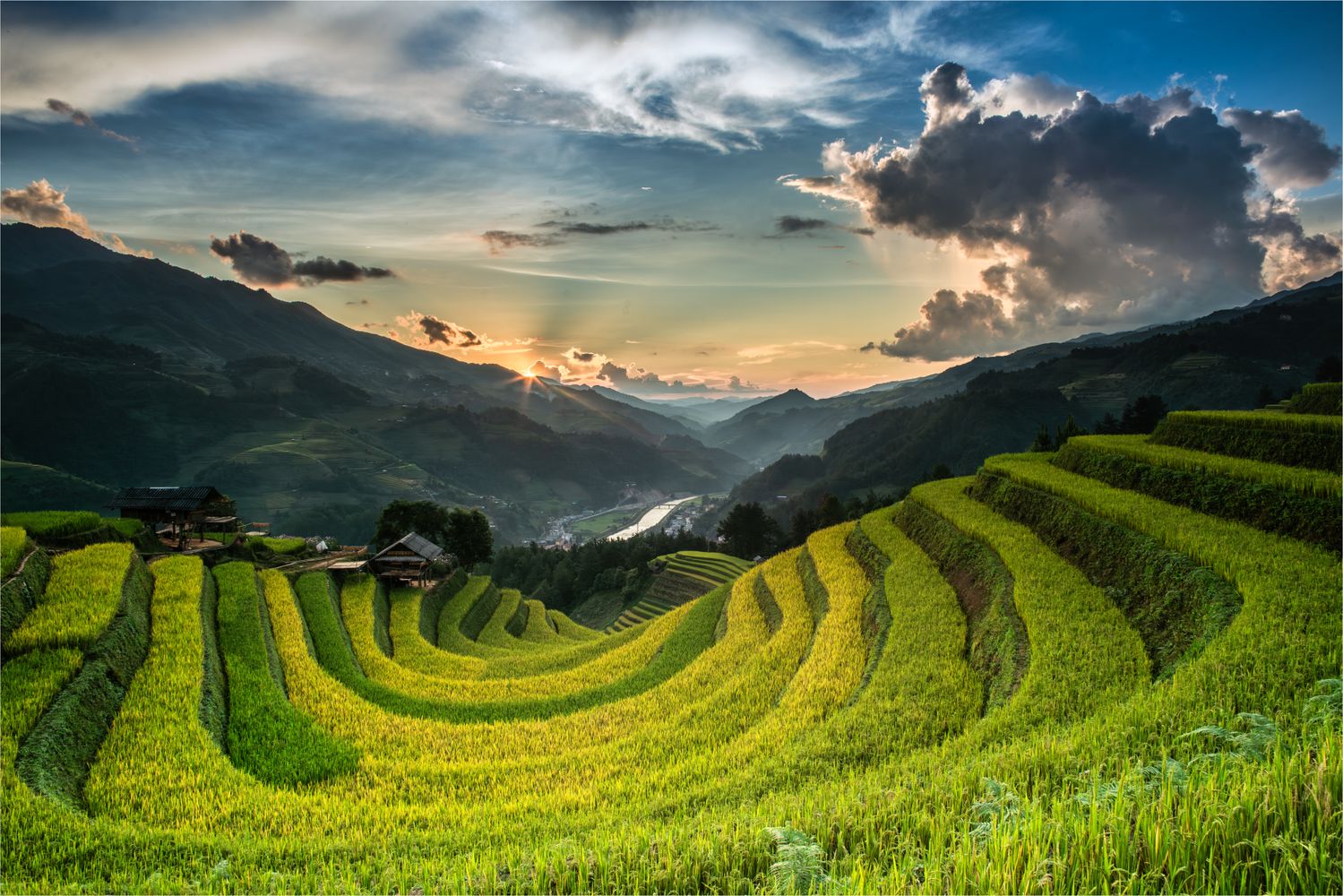


Mu Cang Chai Rice Terraces: How to Time the Harvest View
The terraces do not turn gold everywhere on the same day. Use this timing, viewpoint, and transport guide to plan around the moving harvest window.
September to October is the harvest period identified by Vietnam Tourism for Mu Cang Chai. Fields do not all ripen or get cut at once, so plan around the current conditions in the valleys you want to visit rather than one photograph of golden terraces. A few days give you more chances to change viewpoints if rain or harvest work changes the scene.
Vietnam Tourism describes the route from Hanoi as about 300 kilometres, although the exact distance depends on the road and your start and end points. This is a mountain trip, not a quick photo excursion. The road, weather and stops are part of the time budget.
What the harvest window really means
Within the September–October harvest period, the timing differs by valley. Lower or warmer fields may change first; higher valleys may lag. A forecast can tell you about rain, not guarantee a particular terrace colour.
May to August can show water or green growth at different stages. If you want the harvest view, avoid building the whole plan around a single social-media photograph. Ask your accommodation about the valleys you will actually visit, then keep the route flexible.
Choose viewpoints by route, not by a checklist
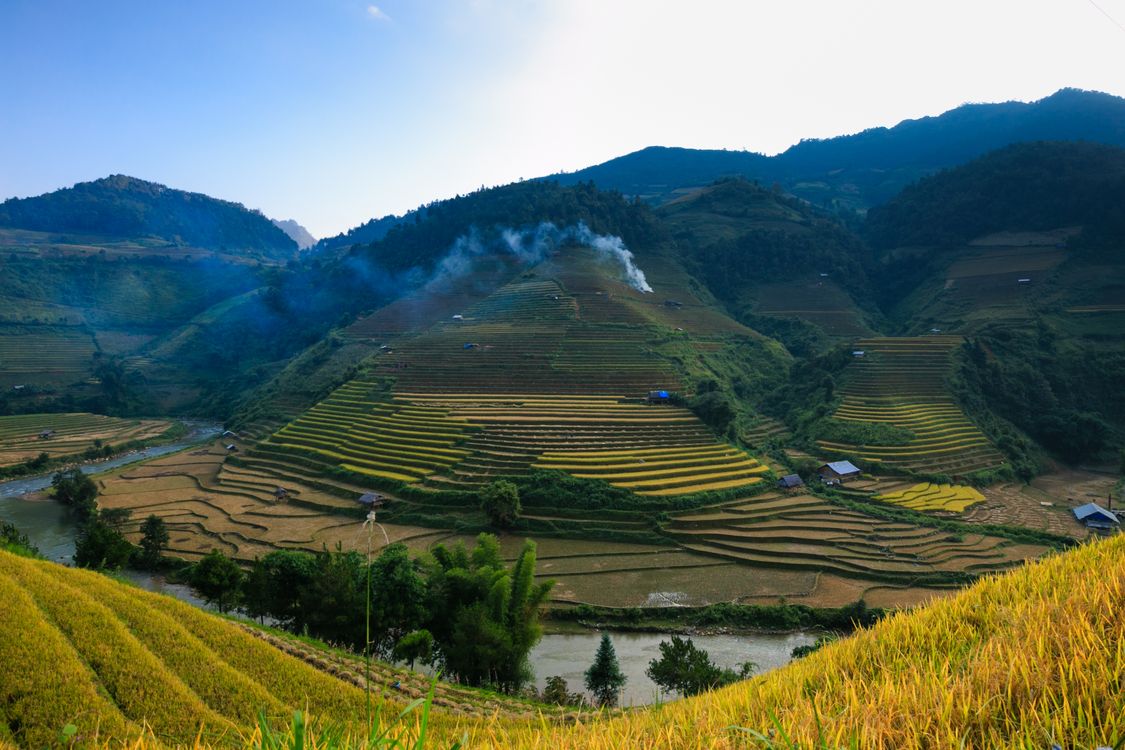
Mam Xoi Hill and La Pan Tan are the headline terrace areas. Che Cu Nha and De Xu Phinh make more sense when you want a broader valley view or a quieter stop, while Horseshoe Hill is about the curve of the terraces from above. The useful question is not “which one is number one?” It is “which two fit today’s road and light?”
- Go early for softer light and cooler roads.
- Carry cash for local access charges, but check the fee at the individual viewpoint before setting out.
- Expect a viewpoint to look different after harvest or rain. That is a reason to look around, not proof that the trip failed.
Use Tu Le to break the journey
Tu Le sits on the approach from Hanoi and works as a real overnight choice, not filler between two photo stops. The valley gives you flatter rice fields, hot springs and cốm during the harvest season before the road climbs toward the higher terraces. Staying there can make the next morning less rushed.
For the proposed connection between Tu Le, Mu Cang Chai and other terraced-field destinations, read our Lao Cai route-feasibility report.
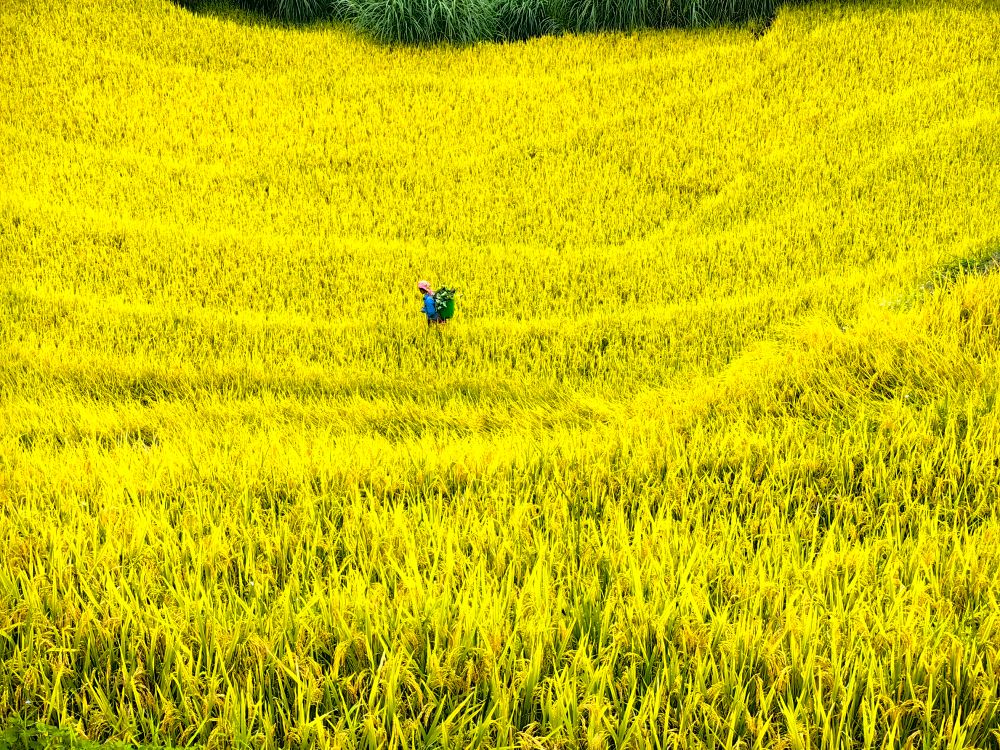
Khau Pha is a weather decision
Khau Pha Pass gives the large-scale mountain view and can be part of the route toward Mu Cang Chai. It is exposed, so clouds, wet surfaces and a blocked view are all possible. If the pass disappears into cloud, slow down and follow local road warnings and stop or change the route if conditions are unsafe. A festival or a good forecast does not remove mountain-road risk.
Getting there without turning the trip into a race
- Private car: the easiest way to stop at Tu Le, Khau Pha and several valleys without carrying all decisions yourself.
- Motorbike: rewarding for an experienced mountain rider, but a poor place to learn after rain.
- Bus: cheaper and less flexible; arrange the final local ride before assuming the district drop-off solves the viewpoint problem.
Book homestays early for late-September and early-October weekends. A room in the most convenient valley is not guaranteed, and moving between Tu Le and Mu Cang Chai may be more useful than insisting on one base.
Pack for the version of the day you get
- A rain layer and shoes that tolerate mud.
- Warm layers for higher, early-morning stops.
- Cash and offline maps.
- A little spare time for slow roads, viewpoint queues or a change of valley.
The best Mu Cang Chai plan has a target window, not a guarantee. Go for the terraces, but build the trip so green fields, harvested fields or cloud do not leave you with nothing to do.
Vietnam Tourism’s Mu Cang Chai overview gives the broad harvest season and the approximate journey from Hanoi. It also notes the difficult approach to Mam Xoi, especially when wet; arrange suitable local transport rather than assuming a normal car reaches every viewpoint.
If Mu Cang Chai is one part of a longer September holiday, compare the mountain leg with the other regions in our September Vietnam planning guide rather than assuming the same conditions across the country.


Content summary
Other blogOther blog
Related blogs

What to Eat in Hue — 10 Dishes Locals Actually Eat
Hue is Vietnam’s food capital and criminally underrated. Here are 10 dishes locals actually eat — where to find them and what they cost.
Where to Stay in Hoi An — Best Areas & Hotels for Every Budget
Old Town or the beach? Here’s the honest breakdown of every Hoi An neighborhood — what each one is like, who it suits, and real hotels at real prices.
10 Best Things to Do in Ben Tre — Coconut Canals, Sunset Birds & Real Mekong Life
Only 85km from Saigon, Ben Tre is the Mekong at its most authentic. Here are 10 things to do — coconut canals, warm candy, sunset storks and food worth the drive.