You land in Hanoi. The air is thick with grilled pork and star anise. Every corner has a plastic stool, a steaming pot, and a line of locals hunched over bowls of something incredible. You want in. But you’ve also read the horror stories — the 48-hour bathroom marathons, the ruined itineraries.
Here’s the thing. I’ve eaten street food in Vietnam hundreds of times. From alleyway bún chả in Hanoi to midnight bánh mì in Saigon. I’ve gotten sick exactly twice — both times because I ignored the rules I’m about to give you.
Vietnamese street food isn’t dangerous. It’s just different. Different bacteria, different hygiene norms, different pace. Your stomach needs a day or two to catch up. Here’s how to help it along.

Follow the Crowd
A group of Danish backpackers I met in Hoi An told me their “system” for choosing where to eat. They’d walk down a street, find the emptiest restaurant with the best TripAdvisor rating, and sit down.
Don’t do that.
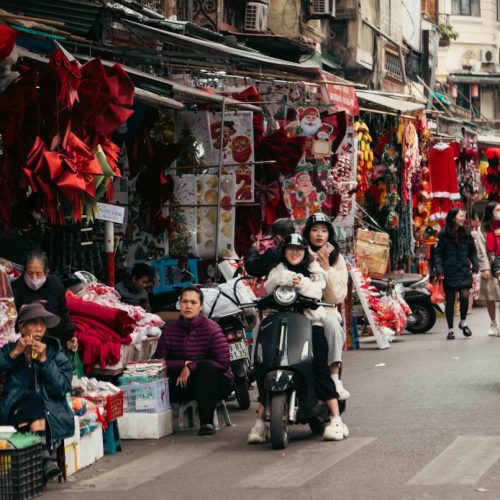
Vietnamese locals are walking food critics. They’ve been eating at these stalls their whole lives. If a stall is packed with Vietnamese people at 7 PM, the food is good and it’s safe. High turnover means nothing sits around. Vegetables get restocked mid-service. The broth never has time to cool into bacteria-friendly territory.
- Busy with locals = fresh ingredients, fast turnover
- Empty but looks nice = food has been sitting
- Full of tourists only = you’re paying 3x for mid food
Open Kitchens Tell No Lies
Picture this. A woman in her 50s drops a handful of bánh cuốn batter onto a stretched cloth over a steaming pot. Seven seconds later she lifts it — a perfect, translucent rice sheet. She does this 300 times a day. You watch the entire process from a plastic stool two feet away.
That’s what you want.
The best street food stalls in Vietnam cook right in front of you. You see the raw ingredients, the heat source, the cook’s hands. Nothing’s hidden in a back room. If it looks clean and the food is being made to order, you’re fine. If there’s a mystery kitchen you can’t see? Keep walking.
Start With Hot Food
Raw herbs are everywhere in Vietnamese food. They’re delicious. They’re also washed in water your stomach doesn’t know yet.
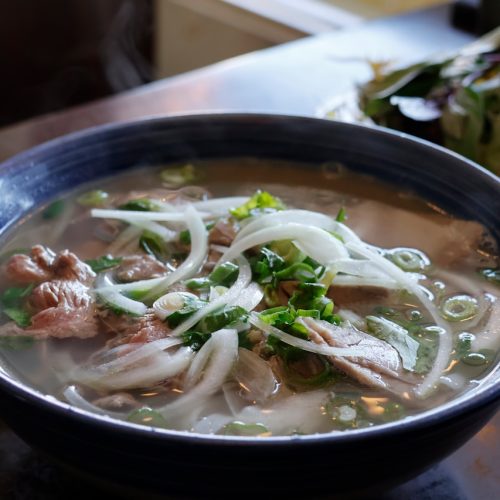
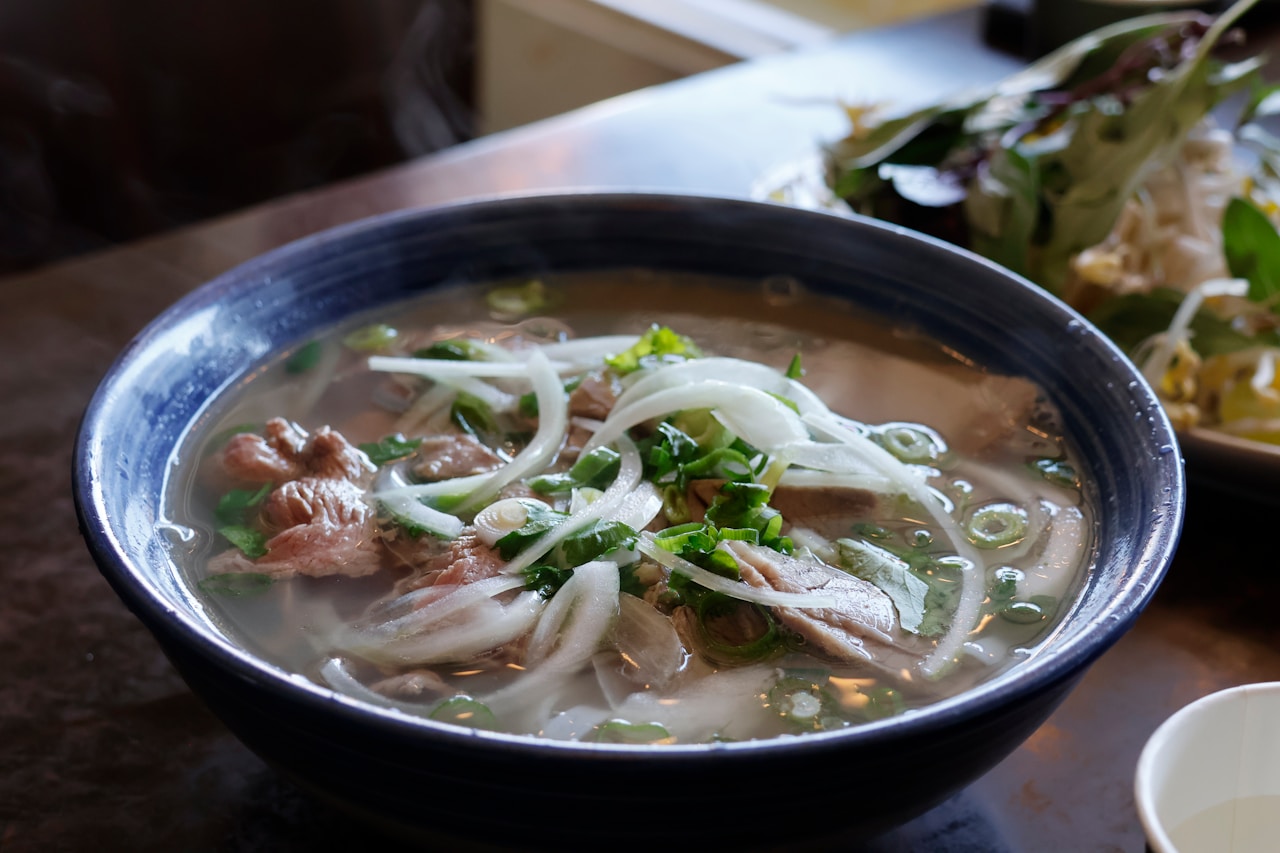
Your first two days, stick to dishes where everything gets blasted with heat. Pho, bún bò Huế, grilled skewers, stir-fried noodles. Nothing raw. Give your gut bacteria time to meet the local microbes on friendlier terms.
- Day 1-2: Soups, grilled meats, stir-fries — all hot, all the way through
- Day 3+: Add fresh herbs, bánh mì with raw veg, gỏi cuốn (fresh spring rolls)
- Always fine: Anything boiled or fried at high heat moments before serving
A guy from London I met in District 4 ignored this. First meal: gỏi cuốn from a riverside cart. He spent the next 36 hours in his hotel room. “Worth it?” I asked. “No,” he said. “Not even close.”
Ice Is Fine. Tap Water Isn’t.
This one confuses people. You order a cà phê sữa đá and there’s a mountain of ice in it. Panic sets in.
Relax. Ice in Vietnam is factory-made from filtered water. It comes in big clear bags, delivered daily. You’ll see the delivery trucks doing their rounds at 6 AM. The ice has a hole through the center — that’s the factory mark. It’s safer than the ice at your local pub back home.
Tap water? Don’t. Not for drinking, not for brushing your teeth if you’re sensitive. Bottled water is cheap (5,000–10,000 VND) and everywhere.
The Small Signals That Matter
You don’t need to be a food safety expert. Just pay attention. Here’s what the locals look for instinctively:
- Napkins. If they’re damp, dusty, or sitting loose on the table — red flag. Properly stacked, dry napkins in a dispenser = the owner cares about details.
- Condiments. Bottles with caps on, kept clean. Not open bowls of sauce sitting under a ceiling fan all day.
- Flies. A few are normal. Vietnam is tropical. But if there’s a swarm around the raw meat tray? Move on.
- Traffic proximity. Roadside stalls right on a busy street = food coated in exhaust dust. Walk 20 meters into the alley.
At a Glance: Good Stall vs. Skip It
| Signal | Good Stall ✅ | Skip It ❌ |
|---|---|---|
| Crowd | Packed with locals | Empty or tourists only |
| Kitchen | Open, you can see cooking | Hidden behind a wall |
| Food | Cooked to order, steaming | Pre-made, sitting out |
| Napkins | Stacked, clean, dry | Damp, dusty, loose |
| Condiments | Bottled, caps on | Open bowls, uncovered |
| Location | Set back from road | Right on heavy traffic |
| Flies | Few or none | Swarming ingredients |
What to Bring
You don’t need a pharmacy in your daypack. But three things make a difference:
- Hand sanitizer. You’ll eat a lot of food with your hands (bánh mì, grilled skewers, sticky rice). Wash when you can. Sanitize when you can’t.
- Probiotics. Start them a week before your trip. It helps your gut handle the new bacteria load.
- Charcoal tablets. If something goes wrong, these stop it fast. Available at any Vietnamese pharmacy for about 20,000 VND.
Before You Go
- Eat when locals eat. Breakfast 6-8 AM, lunch 11-1 PM, dinner 6-8 PM. Outside these windows, food sits longer. Timing matters more than you’d think.
- Skip the donuts and mystery snacks. Vendors walking around with trays of fried dough? It’s been sitting in the sun for hours. Get your snacks from a fixed stall with an active fryer.
- Break large bills at convenience stores. Paying street vendors with 500,000 VND notes is asking for misunderstandings. Grab small change at Circle K or FamilyMart.
- Your first meal sets the tone. Don’t go all-out on raw blood pudding (tiết canh) on arrival day. Build up. Your stomach will thank you.
- If you’re really nervous, book a food tour. A good guide knows exactly which stalls are safe. Our Saigon night food tour does exactly this — we take you to 5 stalls locals have eaten at for decades. No guesswork.
Bottom Line
Vietnamese street food is some of the best in the world. Don’t let fear keep you from it. The rules are simple: follow the locals, pick busy stalls, start with hot food, and trust your eyes. If a place looks off, it probably is. There are 10 more within a 2-minute walk.
Most travelers I know who played it safe regretted it. The ones who ate everything — phở at 6 AM from a grandmother on a Bui Vien corner, bánh xèo from a sizzling pan in an alley you’d miss if you blinked — those are the meals they still talk about years later.
Now go eat something incredible. Just wash your hands first. 😉