






10 Best Things to Do in Phu Yen — Vietnam’s Most Underrated Coast
Phu Yen is Vietnam’s quietest coast — volcanic rock columns, empty beaches, and tuna you’ll dream about. Here are 10 things to do, how to get there, and when to go.
Most people fly from Da Nang to Nha Trang and never look out the window. That’s the flight that passes over Phu Yen — and honestly, it’s the biggest miss on the central coast right now.
Phu Yen is the province everyone forgets exists. It sits between Quy Nhon and Nha Trang, has nearly 200 kilometers of coastline, and yet the beaches stay empty even in August. You know why? Nobody writes about it. Which is exactly why you should go before that changes.
We’ve been driving this coast for years with private tours, and Phu Yen is the stop that keeps surprising our guests. Here are the 10 things that make it worth the detour — plus the honest version of getting there, when to go, and where the crowds actually are.
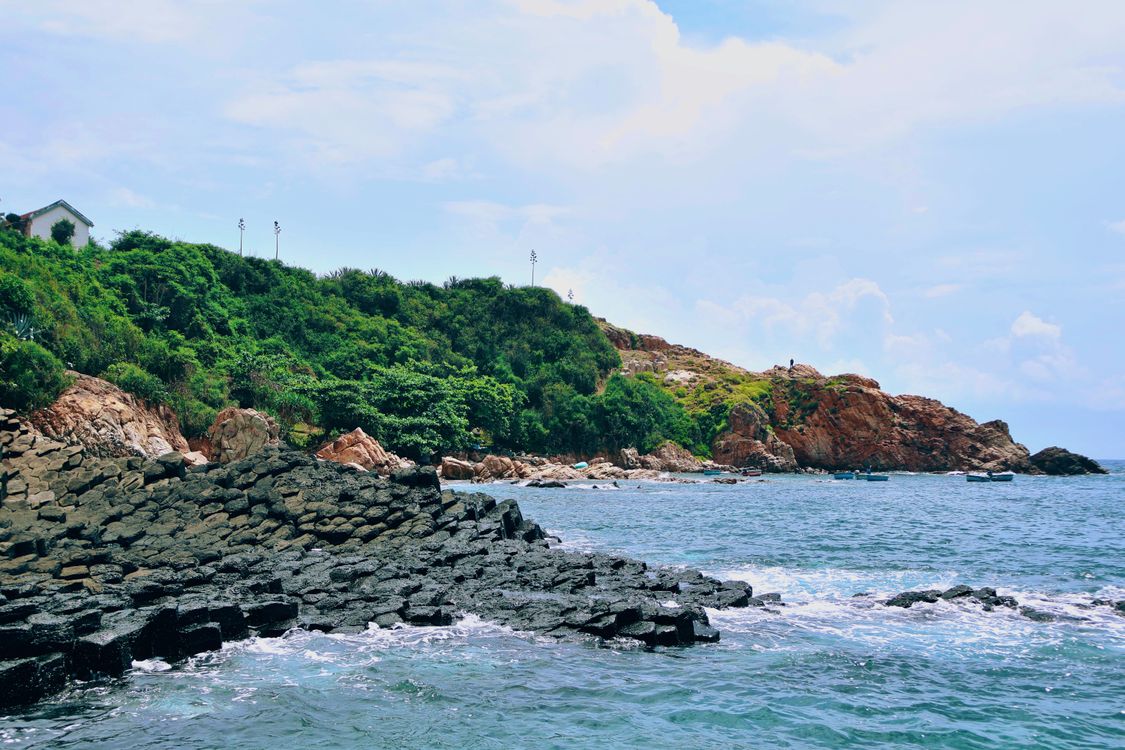
1. Ganh Da Dia — Vietnam’s Giant’s Causeway
Imagine the Giant’s Causeway in Ireland, but smaller, wilder, and with no tour buses. Ganh Da Dia (the “Stone Plate Cliff”) is a stretch of coast where volcanic lava cooled into thousands of black hexagonal basalt columns, stacked like dinner plates along the water. It’s a national heritage site and it looks fake. It isn’t.
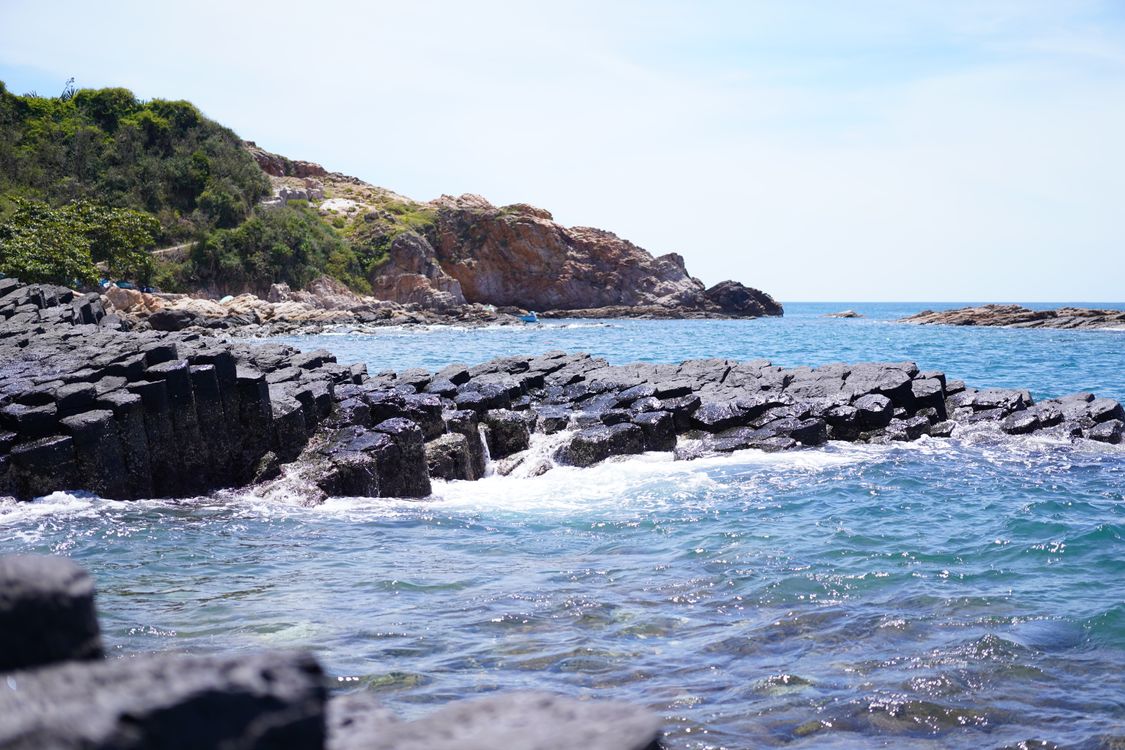
It’s about 35–40 km north of Tuy Hoa city, roughly an hour by motorbike or car along the coastal road. Entry is about 40,000 VND. Go early — by 10am the local tour groups show up and the photo spots get queued. The local legend says pirates once buried treasure here and the columns are what’s left after their campfire exploded. I can’t confirm the pirates, but the columns are real.
Where: An Ninh Dong commune, Tuy An district, about 1 hour north of Tuy Hoa
Price: 40,000 VND entry
Best time: Before 9am or late afternoon
2. Nhan Tower — the 12th-Century Cham Tower Over the City
A 20-minute walk up Nhan Hill and you’re standing next to a tower the Cham people built in the 12th century. Nhan Tower (Thap Nhan) is a red-brick Hindu temple dedicated to Shiva, and it’s survived nearly a thousand years of coastal weather. The brickwork is genuinely impressive — no mortar, just precision stacking.
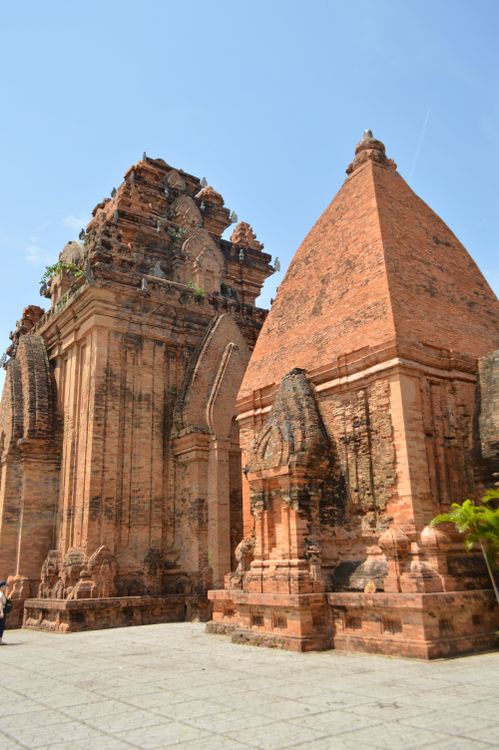
The views from the top are the best in the city — the whole coast, the Da Rang River, and four bridges all laid out below you. There’s a small electric cart if the hill feels like too much (10,000 VND one way, 15,000 VND round trip). Entry is free. Wear modest clothes if you want to go inside the chamber.
Where: Nhan Hill, Tuy Hoa city center
Price: Free (cart 10k–15k VND)
Best time: Late afternoon, soft light
3. Tuy Hoa Beach and the Nghinh Phong Twin Towers
Tuy Hoa’s city beach runs about 10 km along Doc Lap Street, and on a weekday morning you’ll have long stretches of it to yourself. No beach vendors circling you every two minutes, no jet skis. Just wide sand, calm water, and fishing boats heading out.
At the south end stands the Nghinh Phong Twin Towers — two granite towers, 35 and 30 meters tall, designed to echo the basalt columns of Ganh Da Dia. They’re also carved with scenes from the “Hundred Eggs” creation myth. Come back after dark: the towers run a 3D projection show on the square, and the whole city turns out for it. Grab a coffee from a seafront terrace and watch.
Where: Doc Lap Street, Tuy Hoa
Price: Free
Best time: Early morning or sunset
4. Bai Xep — the Beach From the Movie
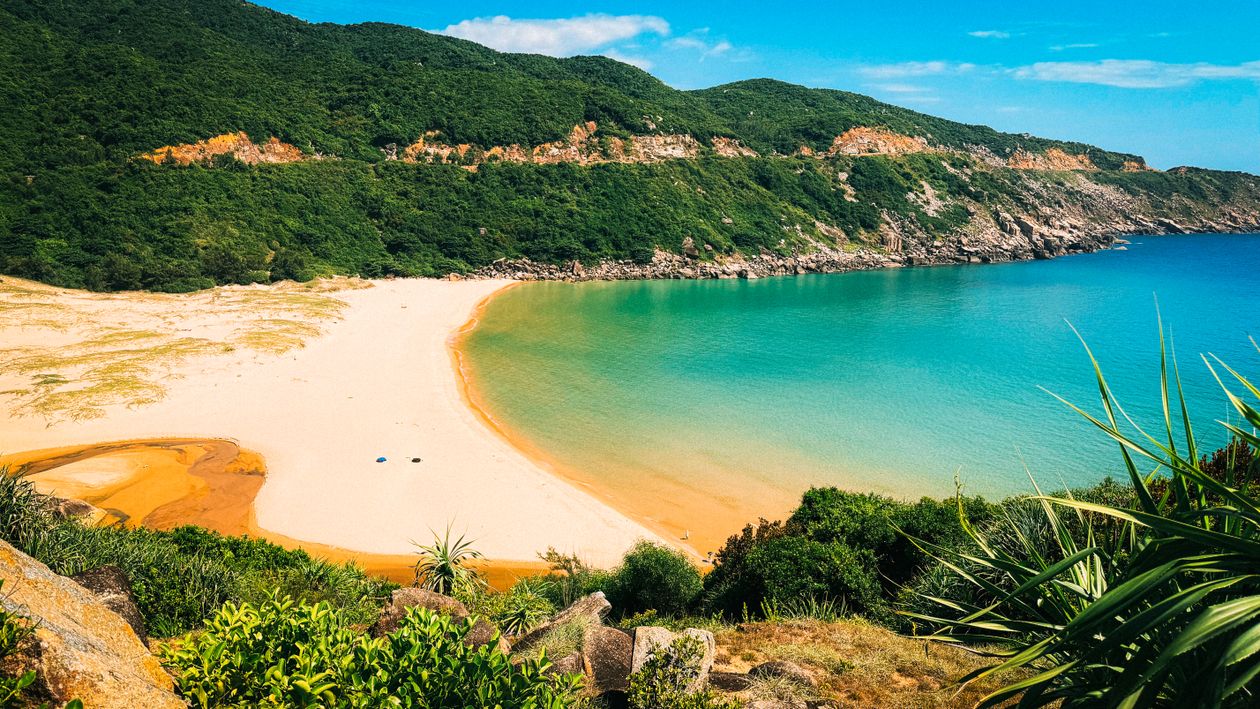
You might not have heard of Bai Xep, but half of Vietnam has. This small crescent beach was the filming location for Toi thay hoa vang tren co xanh (“Yellow Flowers on the Green Grass”), one of the most beloved Vietnamese films of the last decade. Since then it’s become the poster image for Phu Yen — turquoise water, white sand, and a tiny fishing village tucked into the headland.
One honest warning: a resort is being built right at the beach, and access has been hit-or-miss since 2025 — some travelers find it open, some find it fenced off. Check locally before you ride out. If it’s closed, the beaches right around it (Phu Thuong, the fishing village beach) are just as good and less famous.
Where: ~20 minutes south of Tuy Hoa
Price: Small entrance fee when open
Note: Resort construction — access varies
5. Ganh Den Lighthouse — Pink Granite and a Red Lighthouse
If Ganh Da Dia is the famous one, Ganh Den is the one locals actually love. A colonial-era red-and-white lighthouse sits on a headland of pale pink granite boulders, polished smooth by a million years of surf. The contrast — red tower, pink rock, deep blue sea — is ridiculous.
Come at 4:30pm when the sun drops and the granite glows amber. Entry is free, there are almost no other tourists, and people camp and fish around the base on weekends. It’s the spot that makes everyone on our tours reach for their phone.
Where: ~15 km north of Tuy Hoa, near Bai Mon
Price: Free
Best time: 4:30–6pm
6. O Loan Lagoon — the Quiet One You’ll Remember
O Loan Lagoon is a 1,800-hectare tidal lagoon sheltered behind a sand spit — jade-green water, rolling hills on one side, oyster and mussel farms strung across the surface. It doesn’t try to impress you. That’s the point. You pull over, sit on the bank, watch the coracles bob, and suddenly an hour’s gone.
It’s also where Phu Yen’s famous blood cockles come from — pink-fleshed, sweet, and best grilled right there at a roadside stall. There’s a fishing festival on the 7th day of the first lunar month if you happen to be here in February.
Where: An Hai, on the road between Tuy Hoa and Ganh Da Dia
Price: Free
Best time: Golden hour
7. Mang Lang Church — the Oldest Church in Phu Yen
A detour worth making on the way back from Ganh Da Dia: Mang Lang Church, built in 1892 by a French missionary. It’s Gothic-style, moss-green with age, and surrounded by enormous shade trees. It also holds a genuine piece of history — the first book printed in the Vietnamese romanized script (Quoc Ngu), which Alexandre de Rhodes helped develop in the 1600s.
The church stands in the home village of Andrew of Phu Yen, a 17th-century martyr — he’s the first Vietnamese saint from this region. It’s an active church today, so be respectful if a service is on. Combine it with Ganh Da Dia in the same ride; they’re on the same northern loop.
Where: An Thach village, ~1 hour north of Tuy Hoa
Price: Free
Best combined with: Ganh Da Dia
8. Mon Beach and Dien Cape — Where Vietnam Starts
Dien Cape (Mui Dien) is the easternmost point of mainland Vietnam — the first place the sun hits the country. There’s a lighthouse here that’s over 100 years old, still working, with the Dai Lanh mountain range behind it. Below it, Mon Beach unfurls: white sand, clear water, and a shoreline some people rank among the most beautiful in Vietnam.
There’s a small access fee and no shade, so bring an umbrella and go in the late afternoon. Note that swimming isn’t always allowed here — it’s more of a look-and-stare beach. The views from the lighthouse platform are the payoff.
Where: Dong Hoa district, south of Tuy Hoa
Price: Small access fee
Best time: Late afternoon
9. Van Hoa Plateau — the Cool Escape in the Hills
When the coast gets too hot (and in July–August it does), locals head to Van Hoa Plateau, about 40 km west of Tuy Hoa at 400 meters above sea level. It’s Phu Yen’s version of Da Lat — minus the crowds and the cable cars. The road up winds through sugarcane and pepper fields, and the air genuinely cools as you climb.
Up top: Bac Ho Church in the mist, the Go Thi Thung tunnel site from the war, the enormous Ba Ha River Dam, and Ede ethnic villages along the plateau. Give it a morning. This is not a landmark-ticking place — it’s a slow-breathing place. The coffee at a plateau viewpoint stall is unironically great.
Where: Son Hoa district, ~40 km west of Tuy Hoa
Price: Free
Best time: Mornings, year-round cool
10. Phu Yen Food — Tuna, Chive Noodles, and Everything Else
Tuy Hoa runs on fish. The star is ca ngu dai duong — yellowfin tuna, eaten at the source. Sashimi-style raw with wasabi, grilled skewers, or the famous tuna eye stew (brave and rich, honestly delicious). This stretch of coast produces some of Vietnam’s best tuna, and in Tuy Hoa you eat it where it docks.
Then there’s bun ca — Tuy Hoa’s signature fish noodle soup with a clear, bright broth — plus banh hoi heo quay (delicate rice vermicelli with crispy roast pork), banh canh he (chive noodle soup), and com ga Phu Yen (turmeric chicken rice). Finish with kem tron — mixed ice cream with flan, a Phu Yen invention the city is weirdly proud of. You should be too.
Head to the night market along the beach or just follow where locals are eating at 7pm. A full seafood dinner for two runs around 300,000–500,000 VND. Bring cash — most good spots don’t take cards.
Getting to Phu Yen — the Honest Version
The easiest way: fly to Tuy Hoa Airport (TBB). Vietnam Airlines and VietJet run direct flights from Ho Chi Minh City (about 1 hour) and Hanoi. From the airport it’s 15 minutes into town.
No direct flight from where you are? Take the Reunification Express train — Tuy Hoa has its own station on the main north-south line, and the coastal stretch into the city is one of the prettiest bits of the journey. Or hop a sleeper bus from HCMC, Da Nang, or Quy Nhon. From Quy Nhon it’s about 2 hours by road; from Nha Trang about 3.
Once you’re in Tuy Hoa, a motorbike is the move — rentals run about 120,000–150,000 VND/day and most hotels arrange them. Grab works in the city for short hops. If you’d rather not ride, hire a car with a driver for the day to cover the Ganh Da Dia loop. If you’re arriving from HCMC, we can arrange the airport transfer at Tan Son Nhat to get your Vietnam trip started right.
When to Go
Phu Yen has two seasons, full stop. January to August is the dry season — blue skies, calm sea, beach weather. That’s when you should come. September to December is the rainy season, and it can be genuinely wet; beaches get rough and the coastal roads wash out. We’re writing this in August, peak dry season, and it’s exactly as good as it sounds.
One more note: since July 2025, Phu Yen was administratively merged into the new, bigger Dak Lak province as part of Vietnam’s nationwide reform. You’ll still see “Phu Yen” on every map, sign, and booking site — and everyone still calls it that. Just don’t be confused if your tax invoice or some forms say Dak Lak.
Before You Go
- Rent the bike — the best stuff (Ganh Da Dia, Mang Lang, Ganh Den) is a day-ride from town. Skip it and you’ll miss half the province.
- Go early — Ganh Da Dia before 9am and you get the columns to yourself; by 10am the tour groups arrive.
- Bring cash — roadside seafood stalls and lagoon vendors don’t take cards, and they’re the best places to eat.
- Check Bai Xep access — resort construction has closed it on and off since 2025; ask your hotel the morning of.
- Sunblock and a hat — the beach has almost no shade, and the August sun is brutal between 11am and 3pm.
FAQs — What Travelers Are Actually Asking
How many days do I need in Phu Yen?
Three days, two nights is the sweet spot. Day 1: city — beach, Nhan Tower, the towers at night. Day 2: the northern loop — Ganh Da Dia, O Loan, Mang Lang. Day 3: south — Ganh Den, Bai Mon, and a slow beach morning before you leave.
Is Phu Yen worth it over Quy Nhon?
Reddit says it plainly: more to see, prettier beaches, less touristy. Quy Nhon is the more developed choice with better nightlife; Phu Yen is quieter and wilder. If you have time, do both — they’re two hours apart. Here’s our guide to Quy Nhon to compare.
Do I need a motorbike?
For the day trips, yes — or a hired car with driver. The city itself is walkable/Grabbable, but Ganh Da Dia is an hour north and there’s no decent public transport between the sights.
Can I fly there directly?
Yes. Tuy Hoa Airport has direct flights from Ho Chi Minh City and Hanoi. It’s a small airport, so book early in summer.
Is Phu Yen the same as Dak Lak now?
Administratively yes — the two merged in July 2025 and the new province kept the name Dak Lak. Travel-wise, everyone still calls the coast Phu Yen, and all the attractions above are unchanged.
If You’re Exploring Central Vietnam Further
Phu Yen slots perfectly into a south-north coastal run. Head north to Quy Nhon, then Hoi An and Da Nang, or continue south to Nha Trang. If you’re planning to visit Hue as well, check out MIA Hue Tours for the best local experiences up there — they know Hue better than anyone.
Before you book anything, make sure your Vietnam visa is sorted — it’s the one thing that can sink a trip to this coast faster than the rainy season.
The Short Version
Phu Yen is what the central coast used to be before everyone found out about it: empty beaches, a UNESCO-level rock formation, genuine Cham ruins, and seafood that makes Nha Trang’s tourist spots feel like a theme park. Go in the dry season (now through August), rent a motorbike, and give it at least three days.
Want it easier? We can set up private transport and tours along this coast — just message us on WhatsApp/Zalo: +84 70 6666 520.


Content summary
Other blogOther blog
Related blogs

What to Eat in Hue — 10 Dishes Locals Actually Eat
Hue is Vietnam’s food capital and criminally underrated. Here are 10 dishes locals actually eat — where to find them and what they cost.
Where to Stay in Hoi An — Best Areas & Hotels for Every Budget
Old Town or the beach? Here’s the honest breakdown of every Hoi An neighborhood — what each one is like, who it suits, and real hotels at real prices.
10 Best Things to Do in Ben Tre — Coconut Canals, Sunset Birds & Real Mekong Life
Only 85km from Saigon, Ben Tre is the Mekong at its most authentic. Here are 10 things to do — coconut canals, warm candy, sunset storks and food worth the drive.