







How to Get Around Vietnam — Trains, Buses, Flights & Private Cars
Figuring out how to get around Vietnam? Here’s the honest breakdown — flights, trains, sleeper buses and private cars compared, with real prices in VND and exactly which one to pick for your trip.
Figure out how to get around Vietnam before you land, and you’ll save yourself hours of fiddling at a hostel desk. The country is long and skinny — 1,650km from Hanoi to Saigon — and the way you travel between the big stops shapes your whole trip. Speed, comfort, budget, scenery: every option is a trade-off.
Here’s the thing: there’s no single best way to get around Vietnam. There’s a best way for your trip, depending on how much time you have, whether you hate long bus rides, and how much you want to just relax. Most travelers end up mixing three or four different modes.
So here’s what we found — a straight comparison of the trains, the flights, the sleeper buses, and the private cars, with real prices in VND, so you can pick without the guesswork.
The Big Difference in One Sentence
Domestic flights save you hours but cost the most; sleeper buses are the budget backbone of the whole country; the train is a slow, scenic middle ground; and private cars are only worth it for short hops — not the 18-hour marathon runs.
Sound simple? The details get tricky fast, especially if you’re traveling during Tet. Let’s break each one down.
At a Glance
Quick look at the four main ways to move between cities:
| Option | Cost (one-way, per person) | Hanoi → Saigon time | Best for |
|---|---|---|---|
| Flight | From ~800,000 – 2,500,000 VND | 2 hours | Short trips, tight schedules |
| Train | ~700,000 – 1,800,000 VND (sleeper) | 30 – 36 hours | Scenery, comfort, night travel |
| Sleeper bus | ~400,000 – 900,000 VND | 34 – 40 hours | Budget travelers, backpackers |
| Private car | Hotels / km-based; e.g. HCMC airport in-town ~370,000 VND | Not for long haul | Airport runs, day trips, groups |
Prices are typical one-way fares in 2026. They swing hard around Tet and summer holidays, so treat these as a starting point, not a guarantee.
Flights — Fast, but Not Always the Cheap Option
If you’ve only got two weeks and want to see both the North and the South, you’re flying. No way around it. The 30-hour train ride from Hanoi to Saigon eats almost two full days of your trip — that’s a real cost nobody mentions.
Vietnam Airlines is the national carrier and flies the most daily routes. Vietjet and Bamboo Airways cover the budget end. Book domestic flights a few weeks ahead if you can — walk-up prices at Christmas or Tet can double.
My honest take: flying saves time, but it’s also the most stressful on the day. You deal with the airport, the security lines, and the wait — and the airports here are just as much of a slog as any big city’s. For a 2-hour flight you’ll burn 4+ hours total. Worth it when the alternative is a 16-hour bus; a waste when a 90-minute train would’ve done the job.
The Train — Slow, Scenic, and Honestly Kind of Lovely
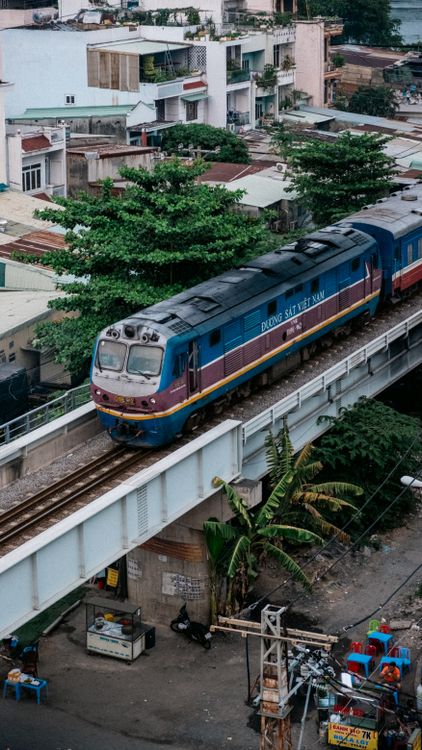
Vietnam’s single 2,600km rail line runs from Saigon up to the Chinese border, and it’s the one form of travel here that’s genuinely relaxing. The Reunification Express chugs between Hanoi and Ho Chi Minh City in about 30–36 hours, stopping in Hue, Da Nang, Nha Trang, and Phan Thiet along the way.
If you’re stopping in Hue, check out MIA Hue Tours — they run some of the best local experiences around the old imperial city, well worth adding to your itinerary.
The sleeper cabins are where this option shines. Four bunks to a room, simple bedding, and you wake up somewhere new. Splurge on a soft sleeper and it’s honestly comfortable — I’ve slept better on a Vietnam sleeper car than on some short-haul flights.
Downsides? It’s slow. Averaging maybe 40km/h, the train isn’t racing anyone. And the track’s colonial-era in places, so it can rumble. But if you’ve got the time, this is the most scenic and sociable way to see the country. Many travelers do one big sleeper stretch and fly the rest.
Book a few days ahead on normal weeks, and weeks ahead around Tet. The soft sleepers sell out first.
Sleeper Buses — The Backpacker’s Workhorse
Open-tour buses and sleeper buses are how most budget travelers actually get around Vietnam. They run constantly between Hanoi, Hue, Hoi An, Da Nang, Nha Trang, Da Lat, Mui Ne, and Saigon — often several departures a day.
A sleeper bus has reclining berths instead of seats. You lie back, they hand you a bottle of water, and you wake up at the next town. Hanoi to Da Nang runs about 14–16 hours and usually lands under 500,000 VND — the cheapest way to cover serious distance.
The catch: quality varies wildly. Some operators are fantastic — clean, on time, decent drivers. Others run old buses with AC that barely works and drivers with a heavy foot. Read recent reviews, go with a well-known name, and use the toilet before you board. You’ll thank me later.
For daytime hops between nearby stops — say Hoi An to Da Nang — a regular bus or the private car we’ll get to next is far better than a sleeper. Don’t book an overnight sleeper for a 40-minute ride.
Private Cars — Worth It for Short Hops and Groups
For a 40-minute airport transfer, a day trip, or a ride with a whole family and luggage, a private car wins every time. It’s door-to-door, stops wherever you want, and nobody has to wrangle bags on and off a bus.
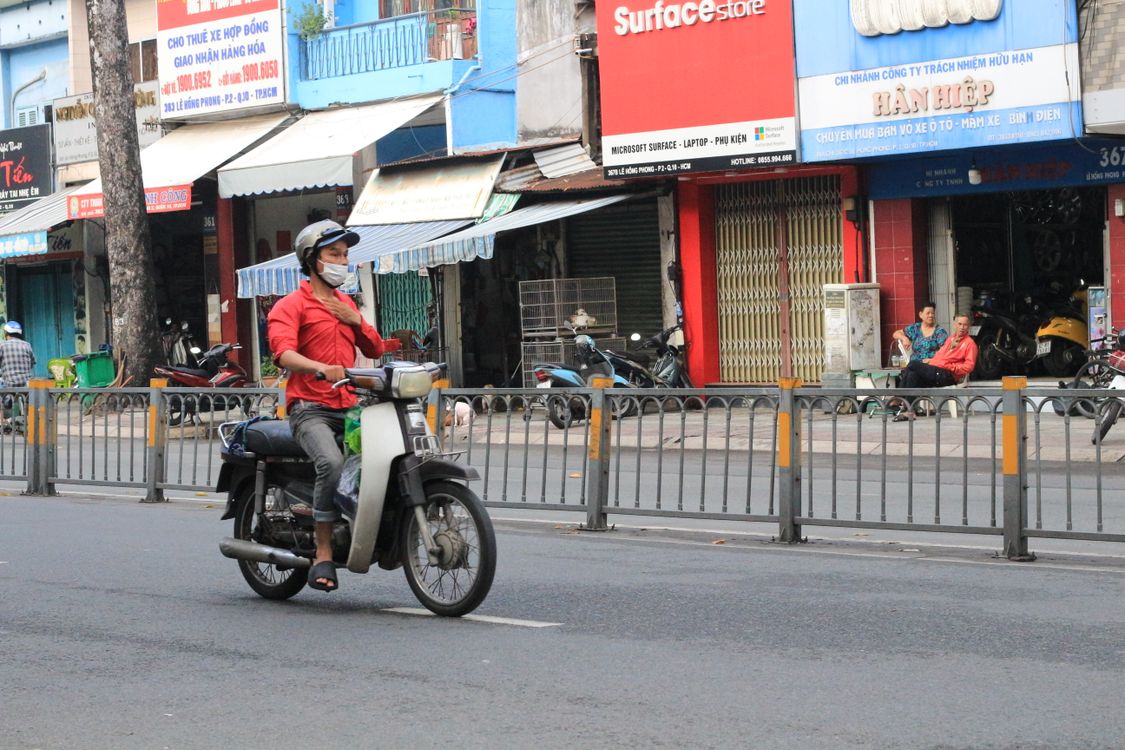
Prices start around 370,000 VND for a 7-seater in-town airport transfer in Ho Chi Minh City. Longer runs like SGN to Ho Tram (about 2–2.5 hours) are quoted per vehicle, and for a group of 4–6 people that per-head cost gets very reasonable compared to everyone buying individual bus tickets.
This is also where most travelers mess up: they try to save money by taking a shared shuttle and end up circling for two hours picking up other passengers. If you value your time, a private transfer is money well spent. Honestly it’s the purchase I’d make first and never regret.
For the Da Nang ↔ Hoi An run, a private car is the standard smart move — 30-40 minutes door to door instead of faffing with buses.
Inside the Cities — Grab, Taxis & Motorbikes
Once you’ve reached a city, getting around day-to-day is a whole different game. Grab (the local Uber) is the default. Journey pricing is cheap, the app handles the language problem, and GrabBike — a motorbike taxi — is often the fastest thing in heavy traffic.
Taxis are fine if you stick to reputable fleets like Mai Linh or Vinasun and make sure the meter’s on. City buses are dirt cheap (often under 15,000 VND) but you’ll need to learn the routes.
If you’re a confident rider, renting a motorbike is a rite of passage — especially in the quiet coastal towns and the mountains around Ha Giang. But don’t make Saigon and Hanoi traffic your first-ever scooter ride. Trust me on that one; the intersections here don’t obey the rules you grew up with.
FAQs — What Travelers Are Actually Asking
Pulled from real questions in Vietnam travel groups and forums — not made up:
- Is it cheaper to fly or take the train in Vietnam? Usually flying costs more per trip, but not by a crazy margin. For short legs under ~300km, the train or bus is cheaper and nearly as fast door-to-door. For anything over ~600km, the flight saves you a full day.
- Are Vietnam’s sleeper buses safe? The reputable operators are fine. Watch for a few famous-name operators whose drivers speed at night — read recent reviews per operator, not just the brand. Most travelers have zero issues.
- Do flights really get canceled/delayed a lot here? Weather is the main culprit, especially in the north during typhoon season (roughly July–October). Budget enough buffer in your itinerary if you’re flying north in those months.
- Should I book Vietnam transport in advance? Book flights and Tet-period buses/trains well in advance. On normal days, trains a few days ahead and sleeper buses one or two days ahead is plenty — unless you’re on a holiday Tuesday, in which case book two weeks out.
- Can I do Vietnam without flying at all? Absolutely. Plenty of people do the whole thing by train and bus. It just needs time — 30+ hours for the big north-south haul either way. It’s slower, cheaper, and honestly more fun.
- Is a private car worth the extra money? For airport runs, day trips, or any trip with luggage or a group — yes, every time. For a lone backpacker on a two-week, six-city budget run, skip it and ride the bus.
The Short Version
Fly when you’re short on time or crossing the whole country. Take the sleeper train if you want comfort and scenery and have a day to burn. Ride the sleeper bus if you’re counting dong. And for anything short — the airport, a day trip, a family outing — book a private car and never look back.
Most smart itineraries do one big flight (usually the Hanoi–Saigon jump), a sleeper train or bus for one scenic leg, and private transfers for the arrival and the little hops. That mix keeps costs sane and your sanity intact. If you’re landing in Ho Chi Minh City, let us sort your airport transfer so you start the trip fresh instead of wrangling bags in the taxi queue. And before you fly in, make sure your visa is handled so nothing slows you down on arrival.


Content summary
Other blogOther blog
Related blogs


What to Eat in Hue — 10 Dishes Locals Actually Eat
Hue is Vietnam’s food capital and criminally underrated. Here are 10 dishes locals actually eat — where to find them and what they cost.

Where to Stay in Hoi An — Best Areas & Hotels for Every Budget
Old Town or the beach? Here’s the honest breakdown of every Hoi An neighborhood — what each one is like, who it suits, and real hotels at real prices.

10 Best Things to Do in Ben Tre — Coconut Canals, Sunset Birds & Real Mekong Life
Only 85km from Saigon, Ben Tre is the Mekong at its most authentic. Here are 10 things to do — coconut canals, warm candy, sunset storks and food worth the drive.